
Media Gallery
External videos, podcasts, and articles related to Commonway System content: real examples, explainers, interviews, and news coverage from outside the guidebook. Each item's blurb explains how it relates to CS content, not a neutral summary of the item itself, and its endorsement label says whether CS agrees with it, includes it for background only, or includes it as a counterexample.
Search & filter
124 of 124 media items
 Aligned
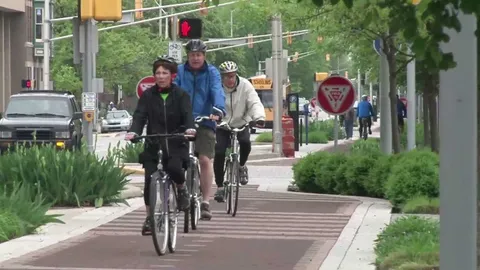
The Indianapolis Cultural Trail: The Next-Gen in U.S. Protected Bike Lanes
 Streetfilms
Indianapolis built an eight-mile separated trail for walking and cycling through its downtown, converting parking and travel lanes into permanent trail space with its own signage, landscaping, and stormwater design. The Cultural Trail shows a road-adjacent greenway working as transportation infrastructure rather than decoration, which is the core premise of the Commonway System's Road-Adjacent Greenway pattern.
MED-109 Aligned
Dutch Countryside Cycling is the Best in the World: 5 Reasons Why
 On 3 Wheels
Where Dutch rural roads meet villages, the roadway narrows, gains a raised speed table, and switches to block paving, physical cues that tell drivers the road's character has changed. These village entrances are working examples of the Rural-to-Town Gateway pattern, which uses the same deliberate design language to mark the transition from rural road to town street.
MED-110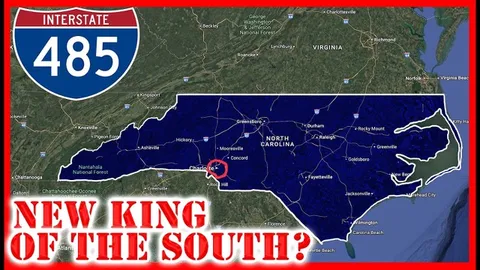 Context only
How I-485 TRANSFORMED Charlotte into a MAJOR American City | Benefits of Ring Roads
 Mileage Mike
Charlotte's I-485 outer beltway rings the metro area, routing through traffic around the core while shaping where the region grows. The case study illustrates the Commonway System's Beltway / Ring Road pattern, a freeway type the guidebook describes but keeps out of its detailed design scope.
MED-111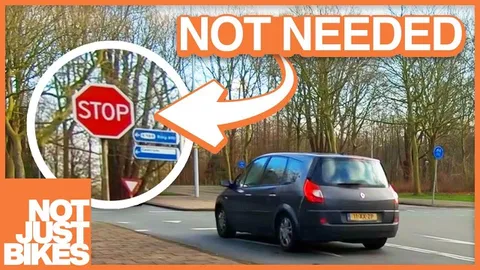 Aligned
Stop Signs Suck and We Should Get Rid of Them
 Not Just Bikes
Not Just Bikes argues that cities install far more stop signs than safety requires, and that removing unwarranted signs can make streets safer, especially for people cycling, citing the Idaho stop law and Dutch practice. The video supports the Commonway System's Situational / Discouraged stance on the All-Way Stop, treating stop control as a tool for specific conditions rather than a default.
MED-112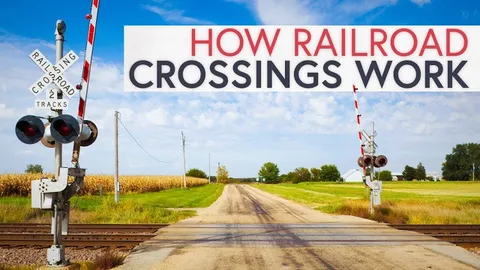 Aligned
How Railroad Crossings Work
 Practical Engineering
Practical Engineering explains how grade crossings detect approaching trains, from simple crossbucks to track circuits that trigger flashing lights and gates with precise timing. The video covers the warning-device hierarchy at the heart of the Commonway System's Railroad Grade Crossing pattern, where a crossing's protection must match its risk.
MED-113 Aligned
Why Most Railroad Crossings Have No Gates, No Lights, and No Warning at All
 Train Curious
Roughly half of America's grade crossings have no gates or lights, marked only by a crossbuck, and this documentary explains why: the cost of active warning, the federal hazard formula that ranks upgrades, and what gates can and cannot prevent. It gives the policy context behind the warning-device decisions the Railroad Grade Crossing pattern treats as a design input.
MED-114 Aligned
Sidepath Facility Selection and Design
This FDOT-funded study built a predictive model from 21 Florida roadway sections comparing bicycle crash rates on sidepaths against on-road riding, and found the sidepath wins once the adjacent road is faster than about 40 mph or wider than three lanes. It is the research base for the Commonway System's Road-Adjacent Greenway pattern: a separated path beside a road is the right facility exactly where the road itself is too fast to share.
MED-115 Aligned
Trail Crossings
The Conservancy's crossing guide covers the three crossing types in the AASHTO bike guide, including adjacent-path crossings where a trail running parallel to a roadway meets an intersecting street with turning vehicles. It answers the exact design problem the Commonway System's Road-Adjacent Greenway pattern names: how the greenway connects and crosses where it meets the road.
MED-116 Aligned
Self-enforcing roadways bringing safety up to speed
The article reports on a joint ICT-IDOT project that analyzed over 1.15 million Illinois crashes against roadway features, finding that wider, emptier-looking roads strongly predict more severe crashes. It documents the self-enforcing (self-explaining) roads principle the Commonway System's Rural-to-Town Gateway pattern relies on: the road's design, not its signs, must tell drivers the character has changed.
MED-117 AlignedEvaluation of Gateway and Low-Cost Traffic-Calming Treatments for Major Routes in Small, Rural Communities
This FHWA-sponsored study installed full gateway treatments (signing, lane reduction, colored pavement, gateway structures) at the entrances to the Iowa communities of Union and Roland, plus low-cost single measures in three more towns, and measured the speed effects. It is field evidence for the Commonway System's Rural-to-Town Gateway pattern: a deliberate package of physical cues at the town edge slows drivers where the road's character changes.
MED-118 Context onlyEffectiveness of Ring Roads in Reducing Traffic Congestion in Cities for Long Run: Big Almaty Ring Road Case Study
This peer-reviewed study reviews ring-road history and post-opening evaluations worldwide and finds that orbital roads give only temporary congestion relief before induced traffic fills them, while shifting accessibility and development toward the suburbs. It describes the dynamics behind the Commonway System's Beltway / Ring Road pattern: a beltway that diverts through traffic today becomes the congestion corridor of the next ring tomorrow.
MED-119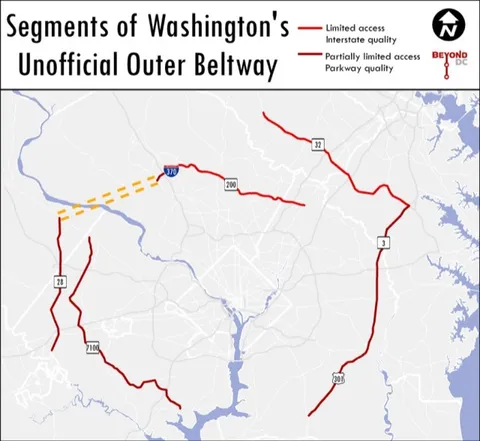 Context only
The "Outer Beltway" Is DC's Zombie Highway Project That Won't Stay Dead
 Streetsblog NYC
The piece traces decades of attempts to build a second beltway around Washington, DC, with built highway segments like the Intercounty Connector and Route 28 already functioning as a de facto outer ring. It is a case study for the Commonway System's Beltway / Ring Road pattern: even a rejected beltway plan keeps resurfacing, segment by segment, through suburban politics.
MED-120 AlignedHSIP Calms Intersections
 Federal Highway Administration
This FHWA brief's "All-Way Stops to Enhance Rural Intersection Safety" section reports North Carolina's program converting two-way-stop intersections to all-way stops, with a 68 percent drop in total crashes and a 77 percent drop in fatal and injury crashes across the first 50 sites, and zero fatal or severe injuries in a 36-site followup. It is the evidence base for the Commonway System's All-Way Stop pattern: adding stop control to every approach is a cheap, proven upgrade where volumes still fit stop control.
MED-121 Context only
Several Scranton red lights to be tested as stop signs
Scranton is converting 13 downtown intersections from traffic signals to all-way stops in a 90-day test starting October 19, 2026, with signals flashing red for 30 days then bagged while engineers study the results. It is a live case study of the Commonway System's intersection philosophy in the other direction: removing a signal where all-way stop control may serve drivers and pedestrians better.
MED-122 AlignedGate Skirts Research at a Highway-Rail Grade Crossing in Ramsey, NJ
FRA and the Volpe Center tested a gate skirt, a secondary hanging gate beneath the pedestrian gate, at a New Jersey crossing to stop pedestrians and cyclists from ducking under active gates, and found a positive pedestrian safety benefit. It is an example of the pedestrian treatments the Commonway System's Railroad Grade Crossing pattern calls for: physical devices that close the gap between the warning and the behavior.
MED-123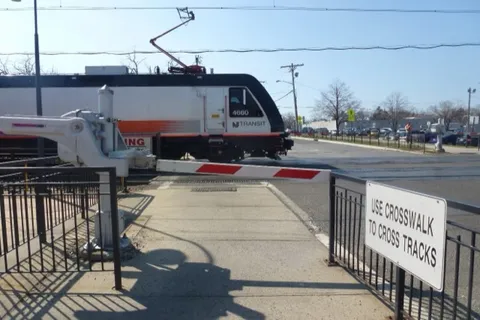 Aligned
Pedestrian channelization
FRA's engineering toolkit entry catalogs pedestrian channelization at grade crossings: fencing, bedstead barriers, and maze or Z-crossing layouts that force pedestrians to slow and look toward oncoming trains before crossing. It supplies the design vocabulary for the pedestrian treatments the Commonway System's Railroad Grade Crossing pattern lists as a key hazard area.
MED-124 Aligned
Freeways stopped being PRETTY (And that's a shame!)
 Road Guy Rob
Rob tells the story of the Merritt Parkway as a showcase of landscape architecture, with planted medians and 68 individually designed bridges, then asks why the Interstate highways built two decades later abandoned beauty for pure machine efficiency. It is the Commonway System's parkway pattern at its best, and the freeway-like tradition that followed is exactly why the pattern now carries a Situational status.
MED-090 Aligned
America's scenic drives
 CBS Sunday Morning
Conor Knighton tours America's national scenic byways from Oregon to Louisiana, showing how these designated routes are preserved and experienced as journeys worth taking for their own sake. It gives the Commonway System's Scenic Highway / Byway pattern a concrete national reference, including the federal designation program the pattern cites.
MED-091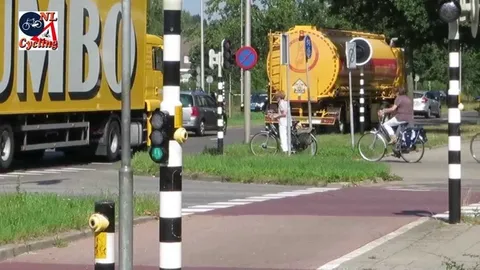 Aligned
Cycling and Heavy Goods Vehicles in the Netherlands (Ep. 295)
 BicycleDutch
Mark Wagenbuur compiles real interactions between cyclists and truck drivers in the Netherlands, showing how separated cycle infrastructure keeps driver mistakes from turning fatal. It is a working example of the blind-zone safety and physically separated bike lanes the Commonway System specifies for industrial collectors, on roads where freight movement still outranks everything else.
MED-092 Aligned
The Best Country in the World for Drivers
Not Just BikesJason Slaughter argues the Netherlands is the best country for drivers because every road has a single clear purpose, with motorways, distributors, and access streets each designed for exactly one job. It is a working demonstration of the functional classification thinking behind the Commonway System's street types, and of why design speed should follow the road's job rather than habit.
MED-093 Aligned
Can you build main streets in the suburbs?
 City Beautiful
Dave Amos compares suburban lifestyle centers with traditional main streets, asking whether main-street character can really be built in the suburbs. It is a direct test of the Commonway System's Main Street pattern, which treats Suburban as an edge case for a typology defined by retail frontage and pedestrian priority.
MED-094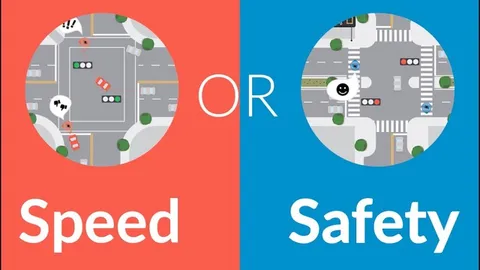 Aligned
Why safety and vehicle speed are incompatible goals for street design
 Smart Growth America
This Smart Growth America video argues that transportation agencies must pick one top priority for each street, speed or safety, and shows how the design changes when safety wins. It states the core tension behind the Commonway System's design speed rule: a street's geometry decides its speed, so the priority has to be chosen before the cross-section is drawn.
MED-095 Aligned
How Are Highways Designed?
Practical EngineeringGrady Hillhouse explains how highway geometry, from curves to superelevation, sets the speed drivers actually travel, making design speed a physical property of the road rather than a number on a sign. It is the engineering basis for the Commonway System's rule that design speed always equals posted speed.
MED-096 AlignedParkways - Transportation
NPS describes its parkways as roads designed for scenic motoring through protected corridors, with pull-offs, lower speed limits, and landscape-first design built as 1930s job-creation projects. This is the federal expression of the Commonway System's parkway pattern, where the road is shaped by the landscape instead of by throughput.
MED-097 Context onlyRoads to inequality: How white supremacy was built into New York's parkways
The investigation traces how Madison Grant's Bronx River Parkway was built for leisurely nature drives by car-owning suburbanites, while Robert Moses' Long Island parkways used low bridges and truck and bus bans that physically kept city bus riders out. It documents the caution behind the Commonway System's Situational rating: a parkway's beauty does not stop its design from deciding who is allowed to use it.
MED-098 AlignedNational Scenic Byways Program
Federal Highway AdministrationFHWA's official program page explains how roads earn National Scenic Byway or All-American Road designation under 23 U.S.C. Section 162 for outstanding scenic, historic, cultural, natural, recreational, or archaeological qualities, with grants for corridor management plans. It is the authoritative reference for the Commonway System's Scenic Highway / Byway pattern and the exact federal program the page cites.
MED-099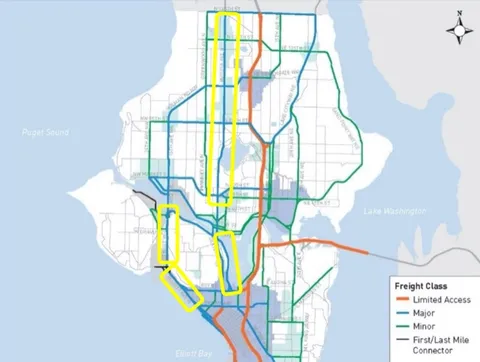 Aligned
Seattle Moves Toward Devoting Street Space to Freight
 The Urbanist
The article covers Seattle DOT's policy to give freight priority over other modes inside the city's Manufacturing and Industrial Centers, including freight-only and freight-and-bus lanes. It shows the Commonway System's Industrial Collector principle in practice: on streets that serve industrial land use, freight movement outranks other modes and gets dedicated space.
MED-100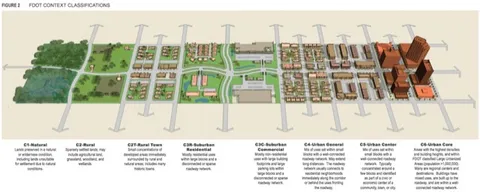 Aligned
Will Florida's New Approach to Urban Streets Reduce Its Traffic Carnage?
Streetsblog USAThe piece reports on FDOT's adoption of eight context classifications, from rural town to urban core, that set allowable design speeds, lane widths, and geometries from surrounding land use rather than functional class alone. It is a real-world example of the Commonway System's Character Transect idea: the same road deliberately changes character as the place around it changes.
MED-101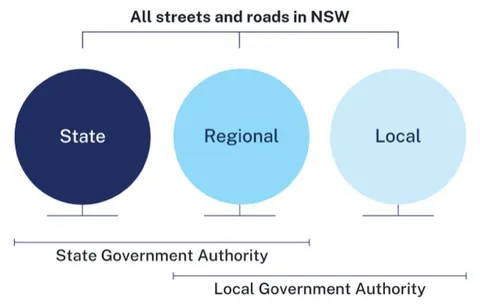 Aligned
Identifying street environments
NSW's official framework sorts roads and streets into four environments, civic spaces, local streets, main streets, and main roads, by weighing movement function against place intensity, with 22 street types under them. It is the closest working government equivalent to the Link and Place thinking behind the Commonway System's Character Transect pattern.
MED-102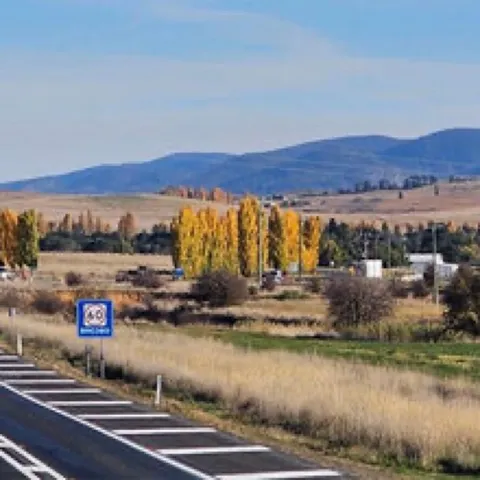 Aligned
Town entry gateway treatments
This design solution specifies what goes where a speed zone changes at a town or village arrival: enhanced signage, lane narrowing, and a colored threshold, with a real installation on the Monaro Highway at Bredbo. It is a concrete example of the Commonway System's density step-down principle: the road's design changes deliberately to tell drivers the density tier has changed.
MED-103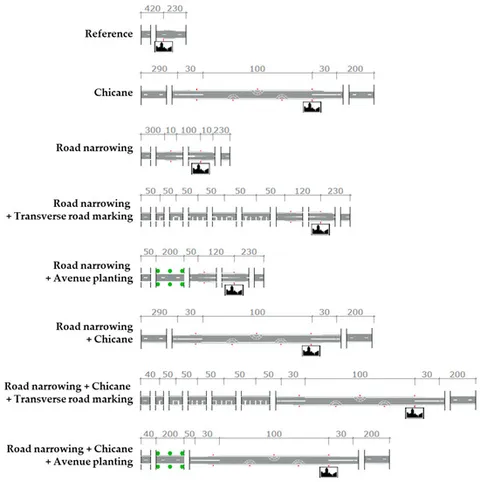 Aligned
A Driving Simulator-Based Assessment of Traffic Calming Measures at High-to-Low Speed Transition Zones
The study tested seven gateway designs in a driving simulator and found physical measures like chicanes and road narrowing cut speeds at rural-to-urban transitions, while planting and markings alone did little. It supplies evidence for the Commonway System's claim that transitions between density tiers need deliberate design change, not just a new speed limit sign.
MED-104 Aligned
Skyline Drive and Shenandoah National Park
The episode traces how Skyline Drive and the Blue Ridge Parkway were designed as naturalistic scenic drives through the Southern Appalachians, with NPS landscape architects shaping the road to frame the scenery and serve the drive itself. It gives the history behind the Commonway System's Scenic Highway / Byway pattern: a low-density, low-development-pressure arterial where the journey is the point.
MED-105 Aligned
Episode 259: The Urban Freight Lab
Talking HeadwaysJeff Wood interviews University of Washington researcher Anne Goodchild about what urban transportation debates miss on freight, and the delivery strategies her Urban Freight Lab is testing for city streets. It frames the design problem the Commonway System's Industrial Collector pattern answers: freight needs are real and constant, so the street should be designed for trucks deliberately rather than treating them as an afterthought.
MED-106 Aligned
America's deadliest road, explained
 Vox
VoxVox examines a one-kilometer stretch of US-19 in Florida, the deadliest of 60 pedestrian-fatality hotspots in a national study, and shows how eight lanes, 45 mph speeds and crossings nearly a kilometer apart make deaths predictable rather than accidental. It is a vivid case study of the Stroad problem and of the crosswalk, signal, driveway and lane-removal fixes the Commonway System specifies.
MED-107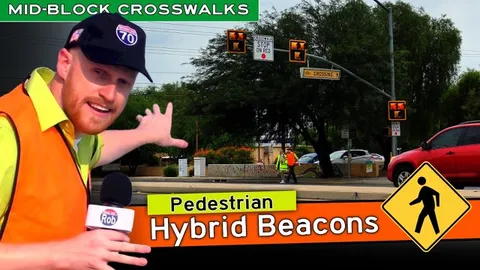 Aligned
Can this "HAWK" STOP LIGHT make walking feel SAFE again?
Road Guy RobRob explains why painted mid-block crosswalks and flashing yellow lights are so often ignored, then shows how the Pedestrian Hybrid Beacon (HAWK), which stays dark until a pedestrian calls it and then commands a full stop, reaches 97 to 99 percent driver compliance, with Tucson's warrant and equity criteria. It supports the Commonway System's Pedestrian Hybrid Beacon pattern directly, and shows why the Crosswalk, RRFB and Pedestrian Signal patterns rate different devices differently.
MED-108 Aligned
Crossing the Street Shouldn't Be Deadly (but it is)
Not Just BikesThis video walks through pedestrian crossing designs, from beg buttons and signal phases to raised crossings, HAWK beacons, and continuous sidewalks. It shows how crossing geometry and timing decide whether walking is safe, the same question behind the Commonway System's crosswalk and crossing elements.
MED-022 Aligned
The Bike Lanes You Can't See - Ontvlechten
Not Just BikesThe video explains ontvlechten, the Dutch practice of disentangling car and bicycle traffic into separate hierarchical networks. It is a worked example of the Commonway System's cycling facilities and network patterns, showing how filtered permeability keeps bike routes safe and direct.
MED-023 Aligned
Trams are Great! So why are the Streetcars SO BAD!?
Not Just BikesThe video diagnoses why North American streetcars underperform, blaming mixed-traffic operation, signal delay, and poor stop design. Its proposed fixes, dedicated lanes, signal priority, and better stops, mirror the transit patterns in the Commonway System.
MED-024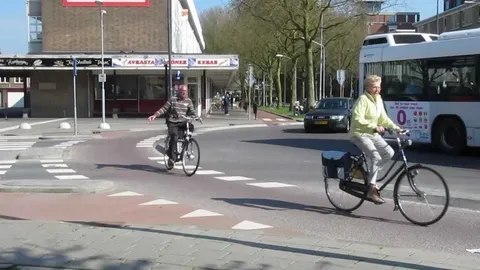 Aligned
Roundabout with safe cycling facilities (Netherlands)
BicycleDutchA visual tour of a Dutch roundabout built with protected cycling facilities. It serves as a real-world reference for the Commonway System's roundabout and protected cycling intersection patterns.
MED-025 Context only
Rolling out a red carpet for cyclists (Netherlands)
BicycleDutchThe video shows the red-asphalt surfacing the Netherlands uses to mark and protect cycle paths. It illustrates the kind of legible, dedicated cycling facility described in the Commonway System's bike lane and greenway patterns.
MED-026 Aligned
The Problem with Vancouver's Boundary Rd BRT (w/ @MovementYVR)
 RMTransit
The video examines TransLink's Boundary Road BRT planning and warns against a watered-down "BRT-lite" that sacrifices route quality. It connects directly to the Commonway System's transit priority and arterial transit guidance, including the tradeoff between parking lanes and transit lanes.
MED-027 Aligned
A Plan to fix Toronto's Streetcars
RMTransitThe video proposes concrete fixes for Toronto's streetcar network: traffic and signal priority, upgraded stops, and operational improvements. These map to the Commonway System's transit priority retrofit and transit patterns.
MED-028 Aligned
Three ways to FIX a STOP LIGHT (so drivers ACTUALLY STOP!)
Road Guy RobThe video covers practical signal-design fixes that cut red-light running, from better visibility to slower approaches and fewer stops. It is applied evidence for the Commonway System's signal intersection pattern.
MED-029 Context only
Would you drive on this FLIP-FLOPPED interchange? (It's better in every way!)
Road Guy RobThe video compares diverging diamond interchanges with conventional diamonds, and looks at SPUIs and pedestrian treatment. It gives the Commonway System's grade-separated interchange pattern a vivid real-world counterpart.
MED-030 Context only
Are some yellow lights TOO SHORT? (Math to check it!)
Road Guy RobThe video works through the math behind yellow and all-red signal timing, including the dilemma zone. It grounds the Commonway System's signal intersection pattern in the timing details that make signals safe.
MED-031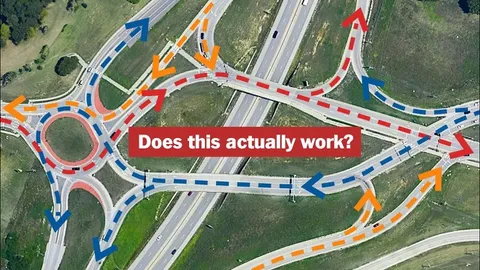 Context only
These Intersections Are Changing the Roads Forever
 Streetcraft
The video tours modern intersection forms: diverging diamonds, roundabouts, and continuous flow intersections. It surveys the same intersection family the Commonway System catalogs, from roundabouts to grade-separated designs.
MED-032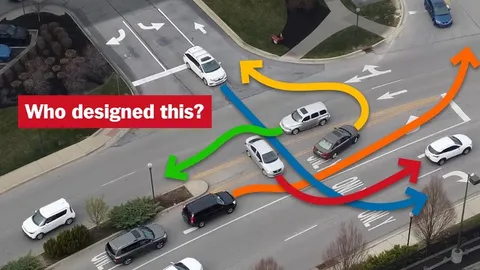 Counterexample
These Intersections Should Be Illegal
StreetcraftThe video analyzes four badly designed American intersections, including an awkward roundabout and highway ramps that strand bike lanes. It is a cautionary companion to the Commonway System's intersection and cycling patterns, showing what failure looks like.
MED-033 Aligned
What Happens If You Remove a Highway?
StreetcraftThe video looks at cities that removed urban highways, from Rochester's Inner Loop to Seattle's Alaskan Way Viaduct, and what replaced them. It is a real-world case for the Commonway System's road diet and corridor reallocation strategies.
MED-034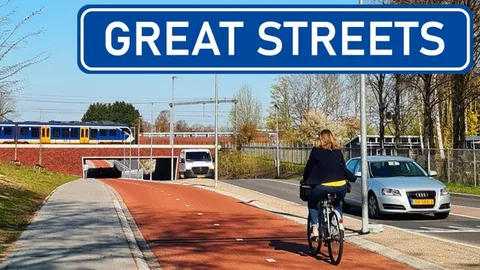 Aligned
Road and Street Design In the Netherlands
 Streetscapes
The video explains the Dutch road hierarchy of through, distributor, and access roads, as applied in Groningen with reference to the CROW manual. It is a clean overview of the functional classification thinking behind the Commonway System's street types guide.
MED-035 Aligned
How to design a great street
City BeautifulThe video distills Allan Jacobs' street design principles: pedestrian space, climate comfort, enclosure, and active facades. It is a friendly introduction to the same street-design ideas the Commonway System's main street and boulevard patterns codify.
MED-036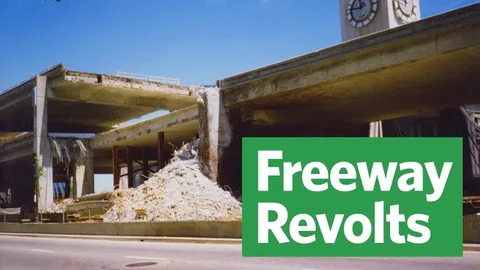 Aligned
Freeways almost ruined San Francisco
City BeautifulThe video recounts the 1950s and 60s freeway revolts and the removal of San Francisco's Embarcadero Freeway. It shows the history behind the Commonway System's skepticism of urban highway expansion and its preference for streets over stroads.
MED-037 Aligned
Bike lanes are not good enough
City BeautifulThe video argues that painted bike lanes fail and shows what works instead: cycle tracks, protected intersections, advisory lanes, plus a road-diet case study. It makes the case for the protected cycling facilities the Commonway System's bike patterns specify.
MED-038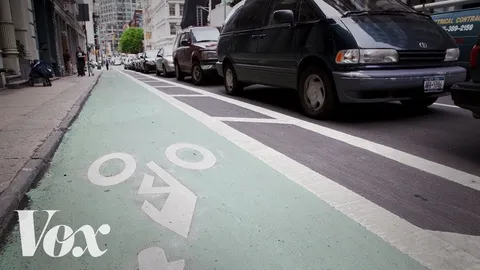 Aligned
Why protected bike lanes are more valuable than parking spaces
VoxThe video uses New York's 9th Avenue parking-protected bike lane to show that trading parking for protected cycling improves safety and even retail sales. It is evidence for the Commonway System's parking-lane reallocation retrofit strategy.
MED-039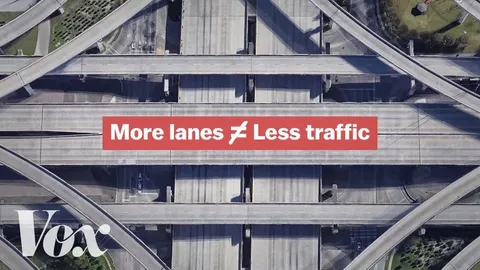 Context only
How highways make traffic worse
VoxExplains induced demand through the Katy Freeway widening and why transit alone falls short. Its Boston example is mischaracterized: the freeway was buried, not removed.
MED-040 Aligned
A Flaw In Street Design May Be Costing Lives - Cheddar Explains
 Cheddar
The video explains "forgiving design," the wide clear zones built for driver error, and draws the roads-versus-streets distinction. It covers the design-speed thinking at the heart of the Commonway System's street types and design speed guides.
MED-041 Context only
The Big Problem With Cloverleaf Interchanges - Cheddar Explains
CheddarThe video breaks down the cloverleaf's weaving problem and surveys alternatives like flyovers, diverging diamonds, and roundabouts. It is a direct video companion to the Commonway System's grade-separated interchange pattern.
MED-042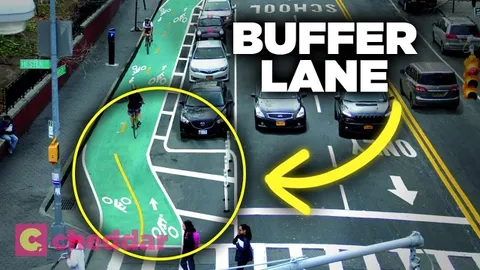 Aligned
How Expanding Bike Lanes Can Actually Decrease Traffic - Cheddar Explains
CheddarThe video cites New York DOT data showing protected bike lanes cut injuries while holding vehicle travel times steady. It supplies the measured results behind the Commonway System's protected bike lane guidance.
MED-043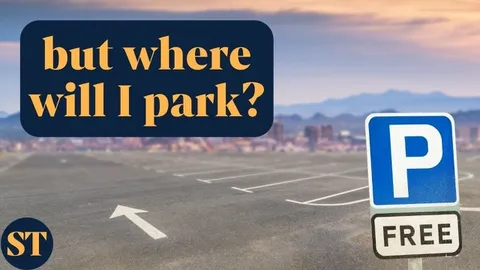 Aligned
Are Parking Lots Ruining Your City?
 Strong Towns
The video traces Fayetteville, Arkansas eliminating parking minimums in 2015 and tallies the land-use and economic costs of mandated parking. It is a case study for the Commonway System's surface parking and density guidance.
MED-044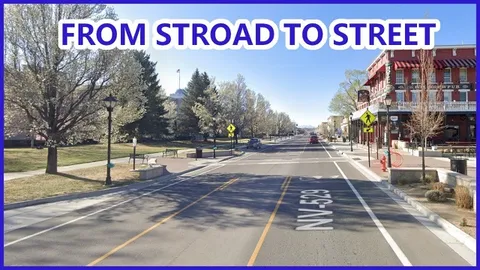 Aligned
How Carson City's Main Stroad Became a Street
 Yet Another Urbanist
The video documents Carson Street's conversion from a four-lane stroad to a two-lane street with wide sidewalks and a plaza, including the traffic studies and parking reclamation behind it. It is a full real-world walkthrough of the Commonway System's stroad pattern and road diet retrofits.
MED-045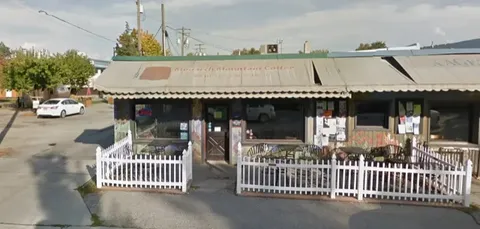 Aligned
Why Parking Minimums Almost Destroyed My Hometown and How We Repealed Them
Strong TownsA Sandpoint, Idaho council member tells how parking minimums nearly forced a bank to demolish local businesses for 200 mandated spaces, and how repealing them downtown brought quick business growth. It is a first-person case study for the Commonway System's parking reform and density guidance.
MED-046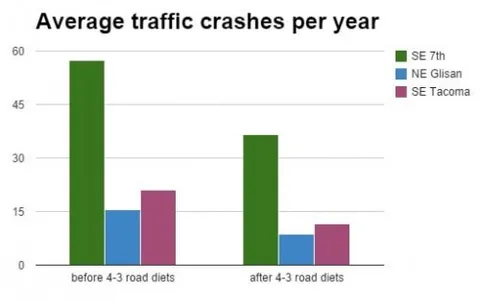 Aligned
The Airtight Case for Road Diets
Streetsblog USAThe article lays out the evidence for four-to-three lane conversions, citing FHWA data showing 20 to 50 percent crash reductions with minimal capacity effects. It is the evidence summary behind the Commonway System's four-to-three road diet retrofit strategy.
MED-047 Aligned
More highways, more driving, more emissions: Explaining "induced demand"
 Transportation for America
Explains induced demand with hard numbers: from 1993 to 2017, the 100 largest US urbanized areas added 42 percent more freeway lane-miles while population grew 32 percent and delay rose 144 percent. A clear explainer for the concept at the core of the Commonway System's skepticism of highway expansion.
MED-048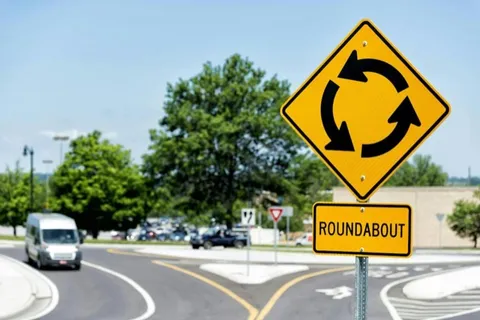 Aligned
What's Behind Connecticut's Growing Roundabout Push?
 Roads & Bridges
The article reports on Connecticut DOT's roundabout program, including a five-intersection study showing severe crashes down 81 percent after conversion. It is real-world evidence for the Commonway System's roundabouts-first intersection philosophy.
MED-049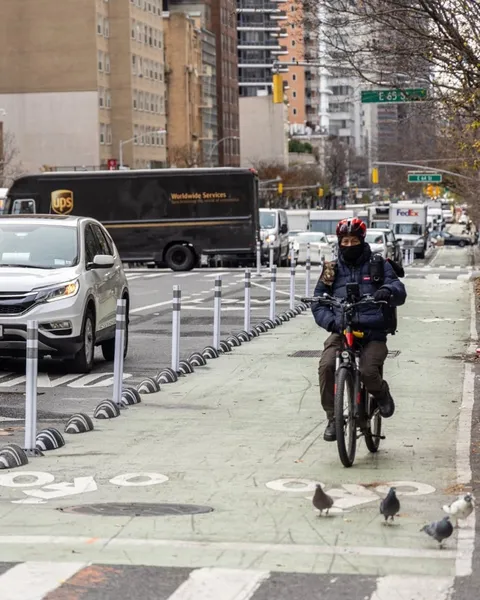 Aligned
Urban Bikeway Design Guide: Protected Bike Lanes
This excerpt from NACTO's Urban Bikeway Design Guide covers protected bike lane design, safety evidence, and applicability thresholds. It is the technical companion to the Commonway System's protected bike lane element.
MED-050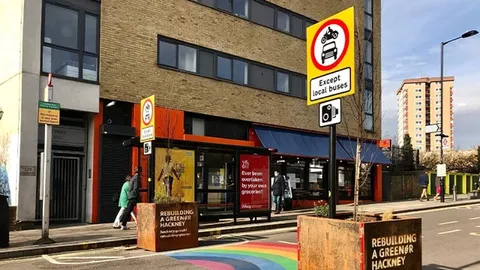 Aligned
Dr Rachel Aldred and Asa Thomas for The Guardian on how low-traffic neighbourhoods do not push traffic onto other roads
The piece summarizes peer-reviewed research on 46 London low-traffic neighbourhoods, finding motor traffic fell by a third inside with little displacement to boundary roads. It is direct evidence for the Commonway System's modal filtering retrofit strategy.
MED-051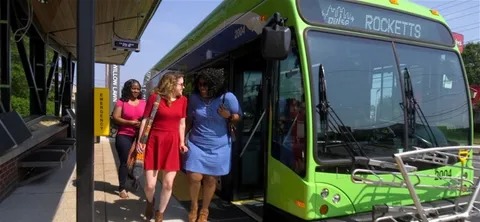 Aligned
ITDP Releases First-Ever Bus Rapid Transit Guide for U.S. Cities
The article announces ITDP's BRT implementation guide for US cities, covering corridor selection, equitable planning, and case studies from Hartford, Albuquerque, and Richmond. It supports the Commonway System's arterial transit pattern and transit priority guidance.
MED-052 Aligned
20mph speed limits do save lives, and most road users respond to them well, study suggests
The article reports on a study of Edinburgh and Belfast showing citywide 20 mph limits cut road deaths by nearly a quarter and serious injuries by a third. It backs the Commonway System's signature 20 mph maximum on local streets.
MED-053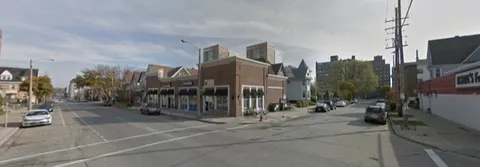 Aligned
3 Reasons to Turn These One-Way Streets into Two-Ways
Strong TownsA Milwaukee resident argues against the one-way couplet outside her door, citing safety, local business exposure, and simpler navigation, with Louisville data showing collisions fell after conversion. It maps to the Commonway System's one-way to two-way conversion retrofit.
MED-054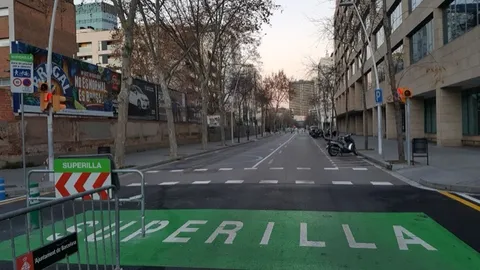 Aligned
Could COVID-19 Finally be the Superblock's U.S. Moment?
Streetsblog USAThe article covers Barcelona's superblock expansion and argues US cities test-drove the concept through pandemic Slow Streets. It is a readable introduction to the Commonway System's superblock retrofit strategy.
MED-055 Aligned
Rochester gave up on a highway and filled it in. Should Baltimore?
This long-form report traces Rochester's Inner Loop East removal, which turned a sunken expressway trench into homes, a bike path, and a boulevard. It is a deep single-city case for the Commonway System's highway-removal reasoning and corridor reallocation strategies.
MED-056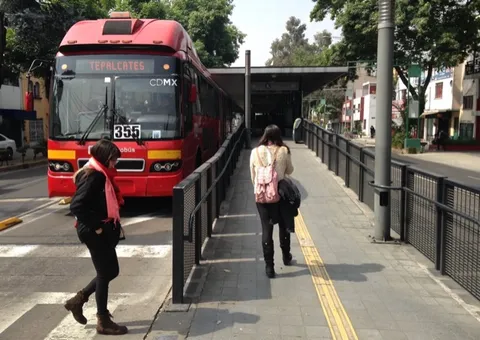 Aligned
All we are saying is give bus rapid transit a chance: Train-like service at a price we can afford
Streetsblog ChicagoA civil engineer lays out the five elements of true BRT and recounts why Chicago's Ashland BRT failed politically while making the case for a Western Avenue line. It covers the transit priority and boarding details in the Commonway System's arterial transit guidance.
MED-057 Context only
Episode 111: Why Congestion Pricing Matters with Diana Lind
 The War on Cars
Diana Lind explains how New York's congestion pricing works, why London's scheme spread low-emission zones across Europe, and how toll revenue funds transit. It connects to the Commonway System's transit guidance by showing how pricing can pay for the alternatives to driving.
MED-058 Aligned
Ep 1: Stacy Thompson - Tactical Transit in Boston
 High Frequency
The episode describes Boston's 2017 pop-up bus lanes, which made trips about 25 percent faster with 94 percent rider approval. It is a real-world demo of the Commonway System's transit priority lane retrofit, including converting parking lanes to bus lanes.
MED-059 Aligned
Trompe L'oeil (Episode 599)
 99% Invisible
The episode's "Built for Speed" segment shows how highway design language, wide lanes and forgiving geometry, tricks drivers into speeding, especially when grafted onto suburban arterials. It illustrates the design-speed thinking behind the Commonway System's street types and stroad analysis.
MED-060 Aligned
Ep 3: Beth Osborne - Failures of the Federal Transportation Program
High FrequencyBeth Osborne explains why the federal transportation program keeps failing, from highways prioritized over maintenance to speed-based metrics that ignore safety. It frames the policy backdrop for the Commonway System's design-speed-equals-posted-speed rule.
MED-061 Aligned
Episode 102: CONSPIRACY!
The War on CarsThe episode uses the 15-minute-city panic as a frame to explain real traffic circulation plans, from Ghent and Groningen to Barcelona's superblocks and London's low-traffic neighbourhoods. It is a substantive tour of the modal filtering measures the Commonway System catalogs.
MED-062 Aligned
How Money for Highways Could Have Built 36 Paris Metros (Ep 590)
Talking HeadwaysThe episode covers a data project mapping the tax base and land value that urban freeways stripped from 142 American cities. It documents the costs behind the Commonway System's skepticism of urban highway building.
MED-063 Aligned
Parking Reform with Tony Jordan (Ep 558)
Talking HeadwaysTony Jordan of the Parking Reform Network makes the case against arbitrary parking requirements and for their abolition. It is an interview-length companion to the Commonway System's parking reform guidance.
MED-064 Aligned
Fabulous Ferndale (Ep 436)
 The Overhead Wire
Ferndale, Michigan's mayor describes the city's road diet of eight-lane Woodward Avenue and the practical politics of working with the state DOT. It is a practitioner-level case study for the Commonway System's road diet strategies.
MED-065 Context only
Let's Get Moving
The UrbanistThis survey episode looks at cities pushing to reduce car dependence and promote public transport, with reports from three cities getting it right. It works as background context for the Commonway System's transit and street design sections.
MED-066 Aligned
A Network First Approach (Ep 349)
The episode lays out a "Network First" strategy for building complete, high-comfort bike networks quickly on low-stress streets. It covers the network build-out thinking behind the Commonway System's cycling facility patterns.
MED-067 Aligned
Open Plans (Ep 341)
The episode covers Open Plans' New York campaigns for school streets, low-traffic neighbourhoods, and intersection daylighting. It shows the Commonway System's modal filtering and traffic calming measures in campaign form.
MED-068 Aligned
A Better Block Versus Years of Planning
The Strong Towns PodcastBetter Block's Krista Nightengale explains the temporary-build, test-and-adjust method for redesigning streets instead of studying them for years. It mirrors the Commonway System's build spectrum, which favors demonstration and pilot stages before permanent construction.
MED-069 Aligned
This Atlanta Corridor Makes Walking Normal and Deadly
The Strong Towns PodcastThe episode examines Atlanta's Buford Highway, a six-to-eight-lane arterial where over 20 percent of trips happen outside a car, and the walk audits that exposed it. It is a vivid case study of the stroad problem the Commonway System classifies as Avoid.
MED-070 Aligned
How Do We Design for Drivers?
The Strong Towns PodcastGuests from Happy Cities and Mobycon argue that people-centered places still have to work for drivers, borrowing the Dutch idea that slower can be faster when trips feel steady and predictable. It offers a distinct angle on the design-speed philosophy behind the Commonway System's street patterns.
MED-071 Aligned
Can U.S. Cities Build Narrow European Streets?
City BeautifulThe video contrasts rigid, car-scaled American grids with the organic narrow streets of older European cities, using Philadelphia's Elfreth's Alley and Quince Street as rare U.S. examples, and names fire-truck access, parking minimums and zoning as the barriers to building more. It is a direct look at the Commonway System's Grid and Organic/Irregular network patterns and the narrow, shared local street patterns, from Alley to Living Street and Pedestrian Plaza.
MED-072 Aligned
SR 104 at Shine Road/Paradise Bay Road and SR 19 - Intersection Safety Improvement Project
 Washington State DOT
This WSDOT video documents a real Intersection Control Evaluation for a crash-prone intersection near the Hood Canal Bridge, weighing safety, operations, and traffic volumes before recommending a metered roundabout. It shows the Commonway System's ICE process working in practice, from staged comparison of control alternatives to a documented selection.
MED-073![Why American Cities Are Broke - The Growth Ponzi Scheme [ST03]](/media-assets/thumbs/med-074-480.webp) Aligned
AlignedWhy American Cities Are Broke - The Growth Ponzi Scheme [ST03]
Not Just BikesJason Slaughter explains how car-dependent North American cities take on long-term infrastructure liabilities their tax base cannot sustain, functioning like a Ponzi scheme. It frames the whole funding problem the Commonway System's eight financing mechanisms sit inside, with graphical examples of the costs and a Canadian case study.
MED-074 Aligned
"You deserve a street that is safe, enjoyable, and pleasant" - Complete Streets in Louisville, KY
National Complete Streets CoalitionThe National Complete Streets Coalition tells the story of Louisville's Complete Streets ordinance, showing how the policy guides city leaders, advocates, and neighbors toward safer streets. It is a concrete example of the Complete Streets policy mechanism the Commonway System lists, treating the ordinance itself as the legal tool.
MED-075![The Wrong Way to Set Speed Limits [ST06]](/media-assets/thumbs/med-076-480.webp) Aligned
AlignedThe Wrong Way to Set Speed Limits [ST06]
Not Just BikesThe video explains how speed limits are actually decided in North America, covering the 85th percentile technique, where it makes sense and where it does not, and how to make drivers slow down. It answers the "how does a change like this get decided" question at the heart of the Commonway System's process method, with speed-limit changes as a named example.
MED-076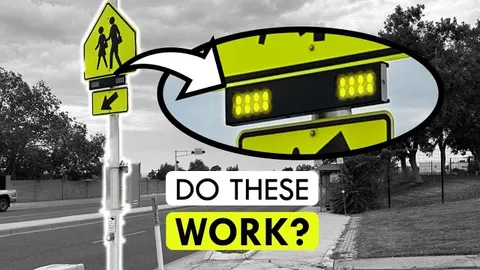 Context only
The Insane Ways Traffic Engineers Try to Make Streets 'Safe' For Walking
 CityNerd
Ray Delahanty examines whether pedestrian crossing devices like RRFBs and HAWK signals actually work and how engineers decide when and where to install them. It covers the engineering decision process behind crosswalk requests, one of the Commonway System's named examples of changes residents ask for.
MED-077 Context only
Why Virginia Has America's Strangest County System
 Beaver Geography
The video walks through Virginia's independent cities and consolidated city-counties, showing how those structures change who governs and taxes what. It makes concrete two of the Commonway System's named exceptions, where the normal city-inside-a-county pattern does not apply.
MED-078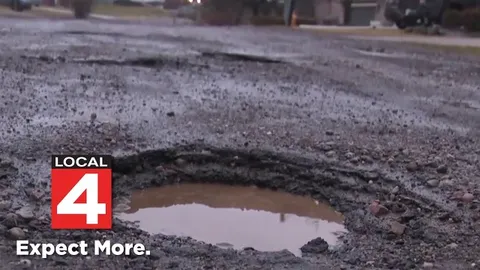 Context only
Why Metro Detroit subdivision roads are so expensive to fix; and what it takes to get yours repaved
 WDIV Local 4 News
This news report explains Michigan's county road commission system, which maintains township roads with no taxing authority of its own and depends on resident-petitioned special assessment districts. It is a road-specific illustration of the Commonway System's Michigan-style road commission exception.
MED-079 Aligned
Intersection Control Evaluation
Federal Highway AdministrationFHWA's official explainer defines ICE as a data-driven, staged framework for screening intersection alternatives and selecting the control that performs best for a specific location. It is the authoritative reference behind the Commonway System's ICE process, including the SPICE, CAP-X, and life-cycle cost tools agencies use.
MED-080 Aligned
Road Safety Audits (RSA)
Federal Highway AdministrationFHWA defines a road safety audit as a formal safety examination of an existing or future road by an independent, multidisciplinary team, usable at any project stage and any project size. It is the authoritative reference for the Commonway System's RSA process, answering the two central audit questions of what creates risk and what could mitigate it.
MED-081 Aligned
The Impact Fee Illusion
Strong TownsEdward Erfurt examines development impact fees as a general financing tool, arguing the "growth pays for growth" framing is an illusion because one-time payments fund construction but not ongoing maintenance. It is a tools-level discussion of the impact-fee mechanism the Commonway System catalogs, using Winter Garden, Florida's fee increase as illustration.
MED-082 Aligned
Complete Streets Policy Framework
Smart Growth America / National Complete Streets CoalitionThe Coalition's current best-practice guide lays out the 10 elements of a strong Complete Streets policy, from commitment and equity prioritization to design guidance and implementation planning. It is the general reference for the Complete Streets policy mechanism the Commonway System lists, written for any level of government rather than one city's story.
MED-083 AlignedStates Looking to Sell Some Roads to Cities and Towns
 Governing
Daniel C. Vock explains which level of government owns which roads and how that ownership determines who can change a street, with a Beaufort, SC example of a city blocked from narrowing lanes on state-owned streets. It directly answers the Commonway System's core question of who has authority over a specific road.
MED-084 Context only
Bill Taft: Here's how we fill Unigov's proverbial potholes
 Indianapolis Business Journal
Bill Taft argues Indianapolis's crumbling streets stem from Unigov's structure, which saddled the consolidated city-county with vast cheaply built suburban street mileage and a maintenance backlog estimated at over $1 billion per year. It makes the Commonway System's consolidated city-county exception concrete for roads, showing how consolidation reshapes a street network's costs.
MED-085 Context onlyHighways and Highway Safety on Indian Lands
This nonpartisan report explains tribal transportation sovereignty, from BIA administration through the Tribal Transportation Program, and documents the mixed ownership of about 157,000 miles of roads on Indian lands. It is the authoritative reference for the Commonway System's tribal-land exception, where jurisdiction follows sovereignty rather than geography.
MED-086 Aligned
Talking Headways Podcast: This is Not the TIF You're Looking For
Talking HeadwaysJeff Wood interviews ASU professor Deborah Salon on location value capture, walking through how transit systems raise the value of the places they serve and where tools like tax increment financing should and should not be used. It treats TIF as one value-capture mechanism among several, matching the Commonway System's tools-level treatment of financing.
MED-087 Aligned
Talking Headways Podcast: Lessons from Quick-Build Street Projects
Talking HeadwaysJeff Wood interviews Smart Growth America's Heidi Simon on how local governments and advocates work through state DOT permitting to change streets via quick-build projects. It matches the Commonway System's "how governments process requests" section as a general process discussion rather than one city's project.
MED-088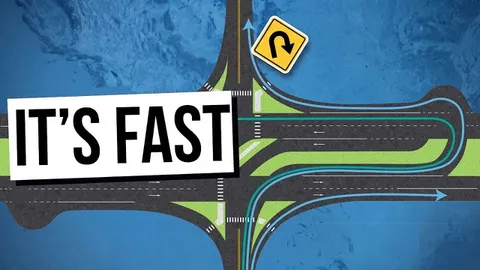 Aligned
The Intersection That Makes Left Turns Impossible
 Safe By Design
This video explains how the Restricted Crossing U-Turn removes left turns and crossing movements from the side street, with crash-reduction results from Alabama, Nebraska and North Carolina and an honest look at the longer pedestrian crossings it can create. It is a close companion to the Commonway System's RCUT pattern and retrofit strategy, and to the related Median U-Turn and Displaced Left-Turn designs.
MED-089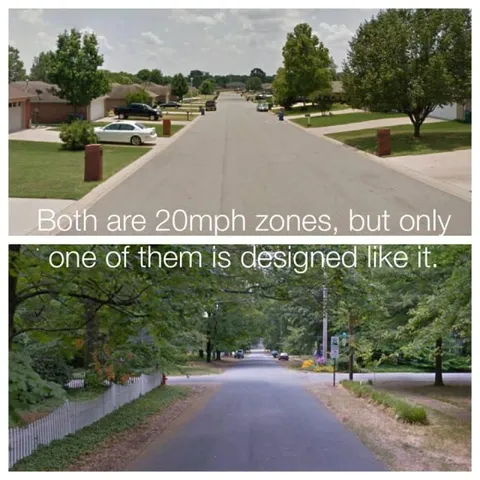 Aligned
The Key to Slowing Traffic is Street Design, Not Speed Limits
Strong TownsMakes the case, with side-by-side street photos, that a posted number on a sign does not change driver behavior the way lane width, block length, and sightlines do, the same self-enforcing-design principle behind CS's own design-speed-equals-posted-speed rule.
MED-021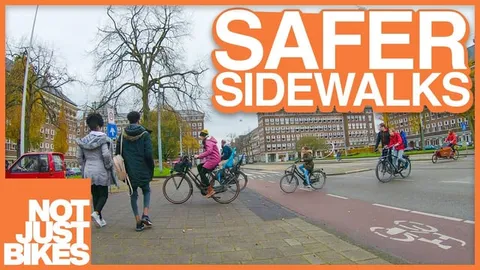 Aligned
The Dutch Solution for Safer Sidewalks - Continuous Sidewalks
Not Just BikesShows the same sidewalk-continuity concept behind Continuous Sidewalk / Raised Junction in practice: the roadway rises to meet the sidewalk at a crossing, rather than the sidewalk dropping to meet the road, so geometry itself signals the priority shift.
MED-001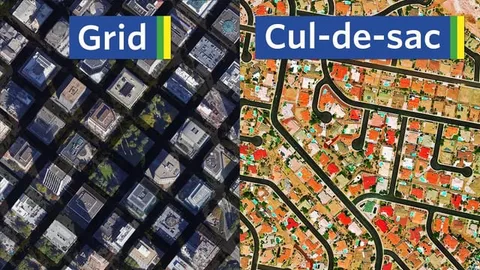 Aligned
The Reason Our Streets Switched to Cul-De-Sacs
City BeautifulTraces the postwar shift from connected grid networks to tree-shaped cul-de-sac subdivisions, then covers the same shared-use-path connector strategy CS's Network Reconnection retrofit recommends for stitching disconnected cul-de-sacs back into the surrounding network.
MED-002 Aligned
Why do so many U.S. cities have gridded streets?
City BeautifulTraces how the grid became the default American street pattern, from William Penn's Philadelphia through Jefferson's Midwest land ordinances, historical background for why the Grid network topology pattern is so dominant in U.S. contexts.
MED-003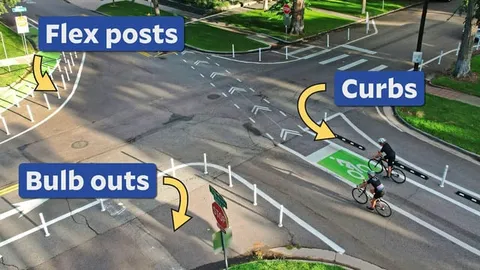 Aligned
Are Streets Too Complicated Now?
City BeautifulAsks whether today's proliferation of lines, signals, and lane types on streets is overcomplication or a needed response to modern demands, a question that runs directly through CS's Element-scale catalog and the density-tiered Corridor retrofit paths this video is tagged to.
MED-004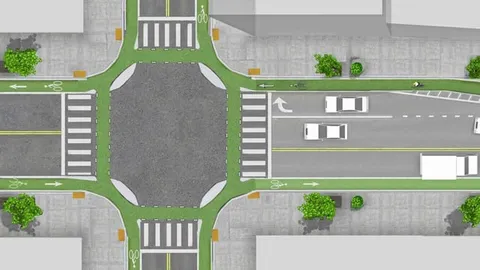 Aligned
Dutch-style intersection design: bike-friendly
BicycleDutchShows the protected-intersection design vocabulary, continuous cycle tracks, corner refuge islands, separated signal phasing, that underpins CS's Protected Intersection pattern and the Corridor retrofit paths built around it.
MED-005 Aligned
Why Aren't Dangerous Drivers Punished?
 Global Cycling Network
Traces why traffic law rarely punishes road violence proportionally, then makes the case CS already builds on: infrastructure should be designed so mistakes aren't fatal, rather than relying on punishment after the fact.
MED-006 Aligned
You've Been Lied To About Roads For 60 Years
Global Cycling NetworkCovers "junk roads," traffic-model incentives to overbuild, and the trillion-dollar cost of designing roads around growth projections that the roads themselves inflate.
MED-007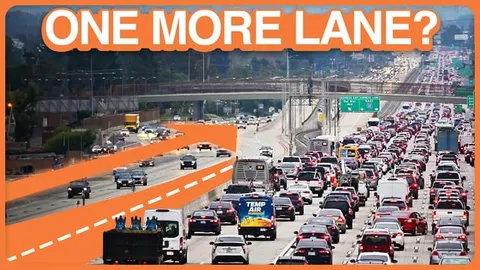 Aligned
More Lanes Are (Still) A Bad Thing
Not Just BikesSeparates induced from latent demand, then covers traffic evaporation, Braess's Paradox, and the Dutch one-lane-plus-transit cross-section as the alternative.
MED-008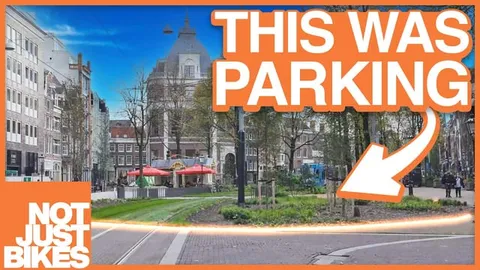 Aligned
Why Amsterdam is Removing 10,000 Parking Spaces
Not Just BikesDocuments Amsterdam's on-street parking reduction through permit attrition and street redesigns, including the tradeoff of a large replacement garage inducing more driving nearby.
MED-009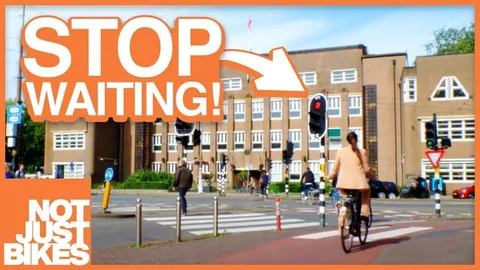 Aligned
Why the Dutch Wait Less at Traffic Lights
Not Just BikesBreaks down Dutch traffic-responsive signal timing, independent phasing, transit signal priority, and no-right-turn-on-red as a pedestrian/cyclist safety measure.
MED-010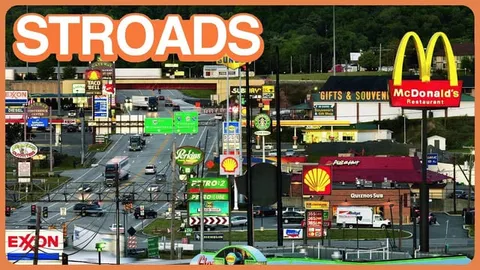 Aligned
Stroads are Ugly, Expensive, and Dangerous
Not Just BikesThe definitive explainer on stroads, and lays out the Dutch three-tier road/street classification system that CS's own Functional Classification structure closely mirrors.
MED-011 Aligned
Can we make cities car free?
City BeautifulCovers Oslo's parking-elimination approach, Barcelona's superblocks, and Houten's ring-road-with-car-free-interior model, each a different route to the same modal-filtering goal.
MED-012 Aligned
Why America Won't Copy Sweden's Cheap Highway Fix
Safe By DesignExplains Sweden's 2+1 alternating-passing-lane cable-barrier retrofit and the specific AASHTO Green Book barriers (literally) that have kept the same fix from scaling in the US.
MED-013 Context only
America Built the Wrong Roundabout (The Dutch Didn't)
Safe By DesignTraces the turbo roundabout's origin and safety data, but also reports the Fietsersbond's documented cyclist/pedestrian crossing hazards at turbo roundabouts directly, worth noting since it complicates a clean "aligned" label.
MED-014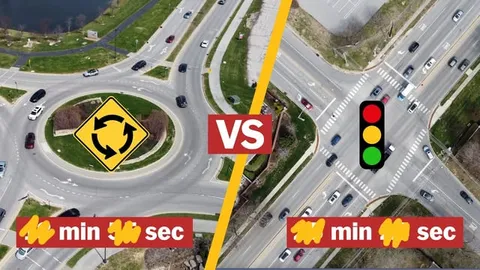 Aligned
Are Roundabouts Actually Better Than Traffic Lights?
StreetcraftA real head-to-head test (Carmel, IN) backing the case for roundabouts on time, fuel efficiency, and crash severity, while being upfront about roundabouts' accessibility gap for blind pedestrians.
MED-015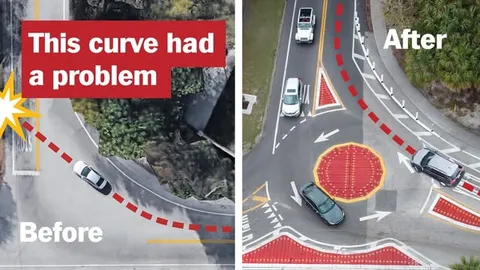 Aligned
This is the key to safer streets
StreetcraftA full traffic-calming toolkit walkthrough, plastic mini-roundabouts, curb extensions, chicanes, the speed bump/hump/cushion/table family, and a Cincinnati road-diet case study with dramatic before/after crash data.
MED-016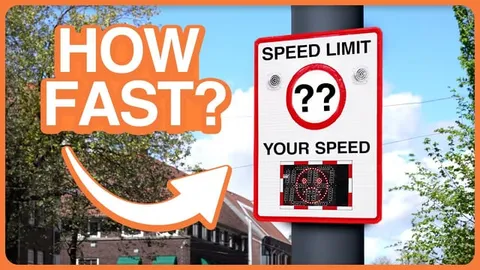 Aligned
What is the "Correct" Speed Limit?
Not Just BikesMakes the physics and data case for 30 km/h (roughly 20 mph) as the safe default urban speed, the same logic behind CS's own Local street speed cap.
MED-017 Aligned
South Carolina's Freeway for Bikes
Road Guy RobThe Swamp Rabbit Trail's rail-to-trail history and its treatment as genuine transportation infrastructure, plus the Travelers Rest Main Street road diet that reallocated car lanes to parking and bike parking.
MED-018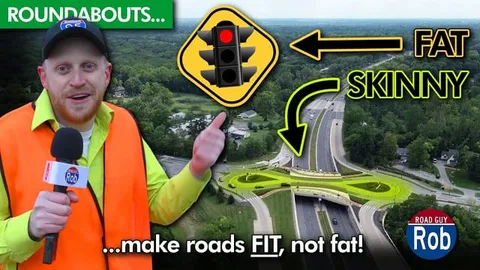 Aligned
Roads don't have to be FAT to be FAST
Road Guy RobExplains the interrupted-flow/platooning physics behind signalized-arterial congestion, then covers Carmel's Keystone Parkway conversion to a limited-access road using compact elevated roundabout interchanges instead of a full diamond interchange.
MED-019 Aligned
Let's FIX the HIGH SCHOOL (with 152 ROUNDABOUTS!)
Road Guy RobThe origin story of Carmel's roundabout program, starting with a contentious school-zone traffic-calming project, and the engineering fix (tightened entries, fatter center island) that made the design work.
MED-020