Search the guidebook

A pattern language for roads and streets

Your street was designed. It can be redesigned.

How wide it is, how fast it feels, whether a child can cross it alone: someone chose each of those, usually by following a standard. The Commonway System shows what good streets look like, cites a source for every recommendation, and explains how to get yours changed.

RFT-CDR-01
WALK5 ftTRAVEL LANE10 ftTRAVEL LANE10 ftTRAVEL LANE10 ftTRAVEL LANE10 ftWALK5 ft5 ftCURB TO CURB · 40 ft5 ftRIGHT OF WAY · 50 ftWALKVEHICLEWALK
WALK5 ftBIKELANE5 ftTRAVEL LANE10 ftTURN LANE10 ftTRAVEL LANE10 ftBIKELANE5 ftWALK5 ft5 ftCURB TO CURB · 40 ft5 ftRIGHT OF WAY · 50 ftWALKBICYCLEVEHICLEBICYCLEWALK121

Before: A four-lane undivided road, 40 ft curb to curb (the width of the first known Road Diet, in Billings, Montana, in 1979): two 10 ft through lanes each direction, with left-turning drivers stopping in the inside through lane.

After: The same 40 ft, restriped as three lanes: one 10 ft through lane each direction and a 10 ft center two-way left-turn lane, which separates turning traffic from through traffic. The freed width becomes a 5 ft bike lane on each side, FHWA's typical one-way bike lane width.

Showing after

Same 40 feet of pavement: one lane each way, a center turn lane, and two bike lanes. FHWA reports 19 to 47 percent fewer crashes after this change. See the road diet

What the evidence says

Three things most people believe about streets, and what the research found

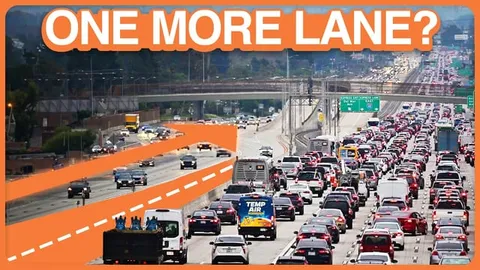
“Wider roads fix traffic”

10.3%

more driving from 10 percent more interstate lanes

The best estimate from a national study. Added lanes fill with new trips within 3 to 10 years, and researchers have measured the effect since at least the 1940s.

Evidence-based Induced Demand
“The speed limit sets the speed”

  • 23 mph 10%
  • 32 mph 25%
  • 42 mph 50%

The street's design sets the speed

The faster a car is going, the likelier a person on foot dies. Changing the sign alone does little; a street built for the speed on its sign does the work.

“Design guides are just suggestions”

$1.37billion

for Los Angeles sidewalks, by court settlement

Residents with disabilities sued under federal law, not a design guide, and won a 30-year commitment to fix sidewalks and crossings. Knowing which rules bind is power.

Not just a catalog

You know this street. Here's what to build instead.

Every pattern carries a status: Recommended, Situational / Discouraged, Avoid, or Descriptive. When a common design fails, the Commonway System says so, and points to the alternative.

WALK · 5 ftPARKINGLANE8 ftTRAVEL LANE12 ftTRAVEL LANE12 ftTURN LANE12 ftTRAVEL LANE12 ftTRAVEL LANE12 ftPARKINGLANE8 ftWALK · 5 ft5 ftCURB TO CURB · 76 ft5 ftRIGHT OF WAY · 86 ftVEHICLE
ART-STD-05 Avoid

Stroad

Through traffic mixed with on-street parking and driveways. Its pattern page exists to help you spot one and replace it.

Through traffic and local access share one road: two wide lanes each way and a center turn lane, on-street parking along the curb, and a driveway into a business every 100 to 200 ft, with no frontage road to gather them. Every driveway is a conflict point; corridors with dense access run about three times the crash rate of well-managed ones.

WALK8 ftPARKING · 7 ftACCESSLANE9 ftMEDIAN · 6 ftTRAVELLANE10 ftTRAVELLANE10 ftTRAVELLANE10 ftTRAVELLANE10 ftMEDIAN · 6 ftACCESSLANE9 ftPARKING · 7 ftWALK8 ft8 ftCURB TO CURB · 84 ft8 ftRIGHT OF WAY · 100 ftVARIESVARIESWALKVEHICLEVEHICLEVEHICLEWALK
ART-BLV-02 Recommended

Multiway Boulevard

Through traffic in the center lanes; parking, driveways, and slow local traffic in side lanes behind tree-lined medians.

The Commonway System doesn't improve a Stroad, it replaces it. Where a pedestrian-first frontage fits the corridor, the replacement is a Boulevard: through traffic in the center lanes, local access and parking moved to slow side lanes behind tree-lined medians. Where it doesn't fit, the alternative is Default Arterial with a separate Local or Frontage / Service Road.

What it stands for

Where the evidence supports it, the Commonway System takes a position

It builds on NACTO, Complete Streets, and Strong Towns, and goes further only where the research does.

  1. Build the street for the speed on its sign.

    Design speed always equals the posted speed limit. Design Speed & Speed Limits

  2. Neighborhood streets are 20 mph.

    Local streets, with no exceptions. Local Default (LOC-DEF-01)

  3. Roundabouts come first.

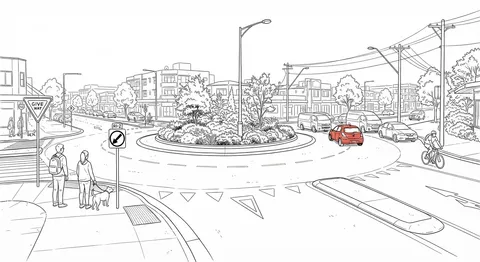
    The default wherever two Collector-or-higher streets meet; signals are a documented last resort. Roundabout (INT-RAB-01)

  4. Arterials move traffic, not parked cars.

    The default Arterial has no on-street parking and no direct property access. Arterial Default (ART-DEF-01)

  5. Added lanes are a cost, not a cure.

    For congestion, pricing, reallocated road space, and a connected network come first; widening comes last. Induced Demand

Why you can trust it

Every recommendation shows its source, and how strong it is

  • Legal / regulatory A statute, adopted code, or government manual.
  • Evidence-based Peer-reviewed research, published crash data, or a formal research report.
  • Precedent-based A real place doing it successfully.
  • ⚠ A claim still waiting for a source is flagged in amber, so it never looks settled.

How evidence disputes are settled

numbered citations
517
patterns
114
retrofit strategies
21
videos, podcasts and articles
209

Growing every week

What's new

Release history and roadmap
  • New: The Pattern viewer now offers three drawing styles, Muted, Ink and Print, chosen with a new Style control next to Units.
  • Improved: People, vehicles and trees in the Pattern viewer are redrawn as gray silhouettes, plain vehicles and single-crown trees, and the drawings are lighter to load.
  • Removed: The earlier full-color illustrated look of the Pattern viewer, approved October 17, 2026, is gone.

Help build it

The Commonway System is maintained in the open. Spot something wrong, or know a source that belongs here?

Suggest changes to this page (opens in new tab) Text-only version Last updated October 18, 2026