
Guide · Make It Happen
Decision & Evaluation Processes
Not every tool in this publication is a design or a piece of legislation. Some are procedures, formal, staged processes a jurisdiction follows to decide which design to build in the first place, or to check a design's safety before or after it's built. This page catalogs two of the most established: Intersection Control Evaluation and the Road Safety Audit.
Both are procedural rather than physical or legal. Neither one is a Retrofit Strategy, and neither is a legal or funding mechanism. They're the process a jurisdiction runs before or alongside using one. See How Road Changes Actually Happen for how these processes typically fit into a project's broader timeline.
Related Media
3 items
 Aligned(opens in new tab)
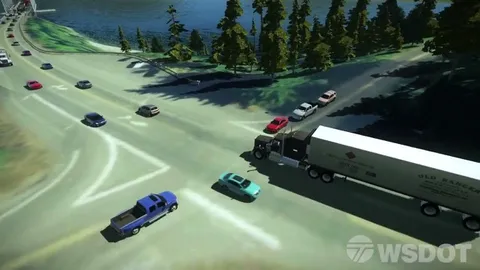
SR 104 at Shine Road/Paradise Bay Road and SR 19 - Intersection Safety Improvement Project
 Washington State DOT
This WSDOT video documents a real Intersection Control Evaluation for a crash-prone intersection near the Hood Canal Bridge, weighing safety, operations, and traffic volumes before recommending a metered roundabout. It shows the Commonway System's ICE process working in practice, from staged comparison of control alternatives to a documented selection.
MED-073 Aligned(opens in new tab)
Intersection Control Evaluation
 Federal Highway Administration
FHWA's official explainer defines ICE as a data-driven, staged framework for screening intersection alternatives and selecting the control that performs best for a specific location. It is the authoritative reference behind the Commonway System's ICE process, including the SPICE, CAP-X, and life-cycle cost tools agencies use.
MED-080 Aligned(opens in new tab)
Road Safety Audits (RSA)
Federal Highway AdministrationFHWA defines a road safety audit as a formal safety examination of an existing or future road by an independent, multidisciplinary team, usable at any project stage and any project size. It is the authoritative reference for the Commonway System's RSA process, answering the two central audit questions of what creates risk and what could mitigate it.
MED-081
#Intersection Control Evaluation (ICE)
What it is. A staged, documented process for comparing intersection control and geometric alternatives, using quantifiable performance measures alongside qualitative community and multimodal considerations, before committing to a design.4
Who conducts it. Public agency staff, typically state DOT or MPO engineers and planners, sometimes with consultant support. A growing number of agencies have adopted formal ICE policies requiring the process for defined project types.6
When it's used. During planning and schematic development, before an intersection design is finalized, whenever a project presents a genuine choice between control types, for instance a signal versus a roundabout versus a Restricted Crossing U-Turn.
The process:
- Scoping. Identify the full range of intersection types that could plausibly serve the location, based on traffic volumes, crash history, and surrounding context.
- Stage I screening. Narrow the full range to a short list of alternatives that meet organizational goals and project needs and are practical to pursue. Alternatives that fail basic feasibility are screened out here.
- Stage II analysis. Evaluate the short-listed alternatives in detail, using quantifiable measures, safety performance, capacity, and cost, alongside qualitative measures like multimodal accommodation and community goals.5
- Comparison and documentation. Compare alternatives side by side using a transparent, traceable method. Some agencies use a dedicated tool for this step; the Safety Performance for Intersection Control Evaluation (SPICE) tool is one example, drawing on Highway Safety Manual crash prediction methods to compare predicted crash frequency and severity across control types.7
- Selection. Choose a preferred alternative, documented well enough that the reasoning is legible to anyone reviewing the decision later, including the public.
Why it matters here. ICE is the formal version of a question this publication raises informally throughout the Pattern catalog: given a choice of intersection control, which one actually performs better for this specific location. ICE is how a jurisdiction answers that question with evidence rather than habit.8
#Road Safety Audit (RSA)
What it is. A formal safety performance examination of an existing or planned road or intersection, conducted by an independent, multidisciplinary team, resulting in a written report of safety issues and improvement opportunities.1
Who conducts it. A team independent of the project's own designers, deliberately drawn from multiple disciplines, so the review isn't checking its own work.
When it's used. RSAs can be run at any project stage: pre-construction (planning and design), during construction, or post-construction (operations and maintenance). They can also be run on existing roads with no active project at all, simply to surface safety issues on infrastructure already in service.
The process:
- Identify the project or existing road to be audited.
- Select the audit team, chosen specifically for independence from the original design work and for a range of relevant disciplines.
- Conduct a pre-audit meeting to review available project information, data, and materials with the audit team before fieldwork begins.
- Perform a field review, examining the site under relevant conditions, which may include different times of day or weather.
- Conduct the audit analysis and prepare a formal report documenting identified safety issues, organized by topic or by risk priority depending on project size.
- Present the findings to the project owner and design team.
- Prepare a formal response addressing each identified issue.
- Incorporate accepted findings into the project or into a plan for the existing road, as appropriate.2
Why it matters here. An RSA is one of the few tools in this publication that can be applied to a street that has no active project at all. It's how a safety issue on an existing Pattern gets surfaced in the first place, often the actual trigger that starts a jurisdiction looking at a Retrofit Strategy.3
#References
- Legal / regulatory Federal Highway Administration. "Road Safety Audits (RSA)."(opens in new tab)
- Legal / regulatory Federal Highway Administration. "FHWA Road Safety Audit Guidelines."(opens in new tab)
- Legal / regulatory Federal Highway Administration. "Conducting Road Safety Audits."(opens in new tab)
- Legal / regulatory Texas Department of Transportation. "Intersection Control Evaluation (ICE) — Context."(opens in new tab)
- Legal / regulatory Texas Department of Transportation. "Intersection Control Evaluation — Process and Analysis."(opens in new tab)
- Legal / regulatory Federal Highway Administration. "Primer on Intersection Control Evaluation (ICE)," FHWA-SA-18-076.(opens in new tab)
- Evidence-based Jenior, P., Butsick, A., Haas, P., and Ray, B. "Safety Performance for Intersection Control Evaluation (SPICE) Tool User Manual," FHWA-SA-18-026.(opens in new tab)
- Evidence-based Federal Highway Administration. "Intersections for Pedestrians and Bicyclists: An Informational Guide."(opens in new tab)