
When Jurisdiction Doesn't Follow the Pattern
Where the usual city, county and state stack breaks, and what to do about it
Every weekday morning, the Rock Creek and Potomac Parkway in Washington, D.C., runs one way: into the city. Every afternoon it flips and runs out. The National Park Service has handled rush hour this way since 1937.1 On its busiest stretch, about 55,000 vehicles a day use it.1
It's a commuter road through the middle of the capital, and the city doesn't run it. A crosswalk request sent to city hall would go nowhere.
The four questions in How Road Changes Actually Happen still work here. But in some places, the answer to "which government?" is one most people wouldn't guess. This page covers ten documented cases.
#Why you should care
- You'll call the right office first. A route number or a city limit sign won't always tell you who's in charge.
- "We can't" may be literally true. In some states, a city can do only what the legislature allows.
- You may be paying a government you've never heard of. Some Colorado subdivisions repay 30-year bonds through a district tax.
- The money follows different rules. In U.S. territories, federal highway funds can't be spent on local roads.
#Which one is you?
| If you live... | You may be dealing with | What changes for your request |
|---|---|---|
| In Jacksonville, Indianapolis or another merged city-county | A consolidated government | Check whether your town opted out |
| In a Virginia city, Baltimore, St. Louis or Carson City | An independent city | The city owns the streets; no county is involved |
| In a Virginia county other than Arlington or Henrico | State-maintained secondary roads | The state DOT, not the county, maintains your road |
| In a Dillon's Rule state | Limited local power | The fix may need the legislature |
| On or near tribal land | Tribal sovereignty | Two governments may both need to approve |
| In a newer Colorado subdivision | A metropolitan district | The district board may be the one to ask |
| At a Hudson River bridge or tunnel | An interstate compact authority | Neither state decides alone |
| In Connecticut | Towns and the state, no counties | Your town's traffic authority, or CTDOT on state roads |
| In Michigan, outside a city or village | A county road commission | The township can't fix it |
| On a parkway through federal parkland | A federal land agency | The agency decides, not the city |
| In Puerto Rico or a U.S. territory | A territorial government | Different federal funding rules |
#Consolidated city-counties
When a city and county merge, some towns usually stay out. In 1968, Jacksonville merged with Duval County, Florida. Baldwin, Atlantic Beach, Neptune Beach and Jacksonville Beach opted out and kept their own governments.2 Baldwin, the only one surrounded by Jacksonville, now gets its policing from the Jacksonville Sheriff's Office.2
Indianapolis and Marion County merged in 1970 under Unigov.3 State law left out municipalities of more than 5,000 people.4 Four stayed out: Beech Grove, Lawrence, Southport and Speedway. Their residents still vote for the consolidated mayor and council and pay countywide taxes.5
For your request: Check whether your address is in the consolidated city or an excluded town. Excluded towns provide their own services or contract for them.25
#Independent cities
Virginia has 38 independent cities, which belong to no county. Only three exist elsewhere: Baltimore, St. Louis and Carson City.6
In Virginia, cities maintain their own streets, with quarterly state payments based on lane miles.7 In counties, the state DOT maintains secondary roads.6 Arlington and Henrico counties are the exceptions: they withdrew from that system, and the state pays them to maintain their own roads.8
For your request: In a Virginia city, go to city hall. In most Virginia counties, a neighborhood road goes to the state DOT.
#Dillon's Rule states
This one doesn't change who owns the road. It changes what that government may do.
Under Dillon's Rule, from an 1868 court opinion, a local government has only three kinds of power: those the state grants in so many words, those fairly implied from them, and those essential to its purpose.9 Virginia is one of about half the states that follow it. There, an act the General Assembly hasn't authorized is void.10
Home rule flips the presumption: a local government can act unless state law forbids it. Some states tie home rule to size. In Washington, only cities over 10,000 people qualify; in Texas, cities over 5,000 can vote to adopt it.11
For your request: "We don't have the authority" may be accurate. If it is, the next step is the legislature, not more local pressure.
#Tribal land
Tribes are governments, alongside federal, state and local ones. The Bureau of Indian Affairs maintains BIA-system roads, and tribes can run all or part of the federal Tribal Transportation Program themselves.12 Each tribe sets its own four-year Tribal Transportation Improvement Program, which the Federal Highway Administration approves.13 Of about 157,000 miles in the federal tribal road inventory, about 100,000 are state and local roads.14
Where a Washington state highway crosses a reservation, the tribe can change the speed limit after an engineering and traffic study. The change takes effect only once the state approves it and signs go up. If the highway is also a city or county road, that government must approve too.15
For your request: Find out whose system the road is in: BIA, tribal, or state and local. A road through a reservation may still be a county road.
#Special and metropolitan districts
In Colorado, a new subdivision's streets may be financed by a metropolitan district: a local government with an elected board and the power to tax property and issue bonds. Developers often set them up.16 Builders say state tax limits make them more attractive. Their bonds usually run 30 years, repaid through residents' property taxes, and they may maintain streets the city hasn't accepted.17
For your request: Check your property tax bill for a district. If one is there, its board may be the one to ask.
#Interstate compact authorities
The Port Authority of New York and New Jersey was created by a 1921 compact between the two states, with the consent of Congress. Twelve commissioners run it, six from each state, appointed by the governors with state senate approval.18 Its police enforce motor vehicle law at the Holland and Lincoln tunnels and the Bayonne, Goethals and George Washington bridges.19
For your request: At a compact facility, the authority is in charge. Neither state's DOT nor any city decides alone.
#States without county government
Connecticut abolished county government in 1960. In 2022, the Census Bureau made its nine planning regions, served by councils of governments, the state's county equivalents.20
Roads split between towns and the state. Glastonbury publishes which of its streets are state routes and sends residents to a state DOT garage for those.21 Traffic control splits too. Each town's traffic authority is its police commission, its manager or police chief, or its board of selectmen, depending on the town. On state highways, it's the Office of the State Traffic Administration.22 Each town also names a Local Traffic Authority who takes state-road requests to the state DOT.23
For your request: On a town road, start with the town's traffic authority. On a state route, the town can pass your request along, but the state decides.
#Michigan road commissions
Michigan townships have no direct authority over local roads.24 County road commissions do, under a 1909 state law, and they are separate from general county government. In Wayne and Macomb counties, a county department fills that role.25 Road commissions can't levy taxes; they run mainly on fuel taxes and registration fees. They hold about 75 percent of Michigan's road miles; the state holds 8 percent, and cities and villages 17 percent.2526 Some also maintain state highways under contract.25
Townships can still pay for road work, through a millage or special assessment.24
For your request: Outside cities and villages, call the county road commission, not the township.
#Federal land inside cities
In Washington, D.C., Beach Drive and the Rock Creek and Potomac Parkway are National Park Service roads that serve as commuter routes.1 The Park Service uses its own sign manual. Under a 1973 agreement with the Federal Highway Administration, amended in 2006, that manual counts as in substantial conformance with the MUTCD.27
For your request: On park roads, the agency that manages the park decides.
#Puerto Rico and the territories
Puerto Rico has no counties. Its 78 municipios are county equivalents, and all are working governments.28 Highway building and maintenance belong to the Puerto Rico Highways and Transportation Authority, created in 1965 under the Department of Transportation and Public Works.29 The Federal Highway Administration's Caribbean division works with it.30
Federal highway law defines "State" to include Puerto Rico.31 Yet Puerto Rico gets its own annual allocation and can't receive funds apportioned to states.32
Guam, the U.S. Virgin Islands, American Samoa and the Northern Mariana Islands share a separate Territorial Highway Program. Its money flows only after each territory signs an agreement with the U.S. Department of Transportation covering road standards and maintenance. It can't pay for routine maintenance or for roads classed as local.32
- Guam has 19 villages and no counties. Its Department of Public Works maintains the island's roads; village mayors help set street priorities. About 155 miles are federal-aid highways, beside about 860 miles of other roads.33
- U.S. Virgin Islands: the territorial Department of Public Works plans, builds and maintains the public roads and runs the federal-aid highway program.34
- Northern Mariana Islands: the Department of Public Works maintains primary and secondary roads.35 Some roads are part of a Territorial Highway System eligible for federal aid.36
- American Samoa has about 150 miles in its territorial highway system.37 Village roads can be funded another way: in 2024, a village access road was paid for by the Interior Department's Office of Insular Affairs and supervised by the Department of Public Works.38
For your request: In a territory, the territorial public works department is usually the road agency. Ask whether the road is in the federal-aid system; if it's local, the money comes from somewhere else.
#Fair questions
My city says it doesn't have the authority. Is that an excuse? Maybe not. In a Dillon's Rule state, an act the legislature hasn't authorized is void.10 Ask which law they're relying on.
Can an old private road become public? Sometimes. In Virginia, a county board can ask the state to take a road into its secondary system once motor vehicles have used it for 20 years and it serves at least three families per mile. The county must pay to bring it up to standard.39 In Connecticut, a court can find a road public when the owner intended it and the public accepted it, and long public use can show acceptance.40
My road crosses a reservation. Whose rules apply? It depends on the road's system. Most miles in the federal tribal inventory are state and local roads.14 On a Washington state highway, both the tribe and the state have a say.15
Why can't my Michigan township fix my road? Because it has no direct authority over it. The county road commission does. Your township can still help pay.24
#What you can do
- Find your row in the table above.
- Ask the first office two things: who maintains this road, and who controls its signs and signals?
- Check your property tax bill for a district you didn't know about.
- Before pushing locally, check your state's rule. Dillon's Rule or home rule changes what your city can do.
- On tribal or federal land, contact the tribe's transportation department or the agency that manages the land.
Related Media
5 items
 Aligned(opens in new tab)
States Looking to Sell Some Roads to Cities and Towns
 Governing
Daniel C. Vock explains which level of government owns which roads and how that ownership determines who can change a street, with a Beaufort, SC example of a city blocked from narrowing lanes on state-owned streets. It directly answers the Commonway System's core question of who has authority over a specific road.
MED-084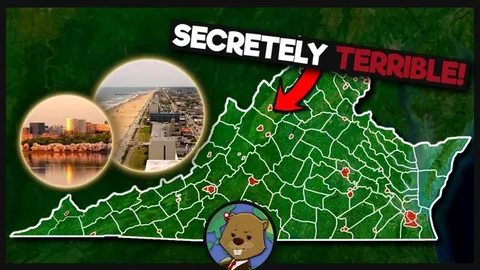 Context only(opens in new tab)
Why Virginia Has America's Strangest County System
 Beaver Geography
The video walks through Virginia's independent cities and consolidated city-counties, showing how those structures change who governs and taxes what. It makes concrete two of the Commonway System's named exceptions, where the normal city-inside-a-county pattern does not apply.
MED-078 Context only(opens in new tab)
Why Metro Detroit subdivision roads are so expensive to fix; and what it takes to get yours repaved
 WDIV Local 4 News
This news report explains Michigan's county road commission system, which maintains township roads with no taxing authority of its own and depends on resident-petitioned special assessment districts. It is a road-specific illustration of the Commonway System's Michigan-style road commission exception.
MED-079 Context only(opens in new tab)
Bill Taft: Here's how we fill Unigov's proverbial potholes
 Indianapolis Business Journal
Bill Taft argues Indianapolis's crumbling streets stem from Unigov's structure, which saddled the consolidated city-county with vast cheaply built suburban street mileage and a maintenance backlog estimated at over $1 billion per year. It makes the Commonway System's consolidated city-county exception concrete for roads, showing how consolidation reshapes a street network's costs.
MED-085- Context only(opens in new tab)
Highways and Highway Safety on Indian Lands
Congressional Research ServiceThis nonpartisan report explains tribal transportation sovereignty, from BIA administration through the Tribal Transportation Program, and documents the mixed ownership of about 157,000 miles of roads on Indian lands. It is the authoritative reference for the Commonway System's tribal-land exception, where jurisdiction follows sovereignty rather than geography.
MED-086
#References
- Precedent-based National Park Service. "Rock Creek Park General Management Plan."(opens in new tab)
- Precedent-based "The Story of Baldwin, the Town Inside of Jacksonville." The Coastal, August 28, 2018.(opens in new tab)
- Precedent-based Taft, Bill. "Here's How We Fill Unigov's Proverbial Potholes." Indianapolis Business Journal, June 13, 2025.(opens in new tab)
- Legal / regulatory Indiana Code § 36-3-1-7.(opens in new tab)
- Precedent-based Neal, Harrison C., III. "Excluded Cities." Encyclopedia of Indianapolis, revised February 2021.(opens in new tab)
- Precedent-based "Virginia Independent Cities: What They Are and How They Work." LegalClarity.(opens in new tab)
- Legal / regulatory Code of Virginia § 33.2-319.(opens in new tab)
- Legal / regulatory Commonwealth Transportation Board. "Arlington and Henrico Counties Maintenance Payments FY 2023." Resolution, June 21, 2022.(opens in new tab)
- Legal / regulatory Legal Information Institute. "Dillon's Rule." Wex, Cornell Law School.(opens in new tab)
- Legal / regulatory Kamptner, Greg. "The Dillon Rule and Its Limitations on a Locality's Land Use Powers." Chapter 5 of Albemarle County Land Use Law Handbook, March 2022.(opens in new tab)
- Precedent-based "Dillon's Rule vs. Home Rule." FiscalNote, November 5, 2021.(opens in new tab)
- Legal / regulatory Bureau of Indian Affairs, Division of Transportation. "Operations."(opens in new tab)
- Legal / regulatory Tribal Transportation Program. 25 C.F.R. Part 170, Subpart D, §§ 170.421-170.424.(opens in new tab)
- Evidence-based Congressional Research Service. Highways and Highway Safety on Indian Lands. R44359, February 2, 2016.(opens in new tab)
- Legal / regulatory Revised Code of Washington 46.61.480 (2009 c 383 § 1).(opens in new tab)
- Legal / regulatory Colorado Division of Local Government. "Special Districts: A Brief Review for Residents."(opens in new tab) Summarizes C.R.S. Title 32, Article 1.
- Precedent-based Home Builders Association of Colorado. "Colorado Metro Districts."(opens in new tab)
- Legal / regulatory "New York-New Jersey Port Authority Compact of 1921." Ballotpedia.(opens in new tab)
- Precedent-based ⚠ "Port Authority of New York and New Jersey Police Department." Wikipedia.(opens in new tab) No primary source found for the facility list.
- Legal / regulatory U.S. Census Bureau. "Change to County-Equivalents in the State of Connecticut." Federal Register, June 6, 2022.(opens in new tab)
- Precedent-based Town of Glastonbury, Connecticut. "Town vs. State Roads."(opens in new tab)
- Legal / regulatory Connecticut General Statutes §§ 14-297(7) and 14-298.(opens in new tab)
- Legal / regulatory Connecticut Department of Transportation. "Local Traffic Authority."(opens in new tab)
- Precedent-based Michigan Townships Association. "What Can We Do About These Roads?" Presentation, undated.(opens in new tab)
- Legal / regulatory Road Commission for Oakland County. "What Is the Road Commission?"(opens in new tab)
- Precedent-based Charter Township of Canton, Michigan. Roads FAQ.(opens in new tab)
- Legal / regulatory Federal Highway Administration and National Park Service. Memorandum of Understanding on Traffic Control Devices on Roads in National Parks, 1973, amended 2006.(opens in new tab)
- Legal / regulatory U.S. Census Bureau. "Puerto Rico." 2010 State and Local Geography Guides.(opens in new tab)
- Precedent-based ⚠ "Puerto Rico Highways and Transportation Authority." Wikipedia.(opens in new tab) Founding act (Act 74 of 1965) not read in the original.
- Legal / regulatory Federal Highway Administration. "Puerto Rico/U.S. Virgin Islands Division."(opens in new tab)
- Legal / regulatory 23 U.S.C. § 101(a)(28).(opens in new tab)
- Legal / regulatory Territorial and Puerto Rico Highway Program. 23 U.S.C. § 165.(opens in new tab)
- Precedent-based Guam Department of Public Works. Village Streets Master Plan. 2009, revised March 30, 2011.(opens in new tab)
- Precedent-based U.S. Virgin Islands Department of Public Works. About the department.(opens in new tab)
- Precedent-based CNMI Department of Public Works. Fiscal Year 2023 Citizen-Centric Report.(opens in new tab)
- Precedent-based CNMI Joint Military Training Environmental Impact Statement, Revised Draft, Chapter 3.7, Transportation.(opens in new tab)
- Precedent-based King, Christopher, and Faleosina Voight. Slides, Territorial Climate and Infrastructure Workshop, Office of Insular Affairs, March 2022.(opens in new tab) The slides also give a 59-mile figure; the 150-mile system total is used here.
- Precedent-based "Investing in American Samoa's Village Roads." Samoa News, February 2024.(opens in new tab)
- Legal / regulatory Code of Virginia § 33.2-335.(opens in new tab)
- Legal / regulatory A & H Corp. v. City of Bridgeport, 180 Conn. 435, 430 A.2d 25 (1980).(opens in new tab)