
Retrofits · Corridor
RFT-CDR-01Four-to-three lane road diet
Converts an existing four-lane undivided roadway (two through lanes each direction) into three lanes: one through lane each direction plus a center two-way left-turn lane, reclaiming the freed width for other uses.
Before and after
After. The same 40 ft, restriped as three lanes: one 10 ft through lane each direction and a 10 ft center two-way left-turn lane, which separates turning traffic from through traffic. The freed width becomes a 5 ft bike lane on each side, FHWA's typical one-way bike lane width.4
What changed from Before:
- Added: bike lane, 5 ft
- Added: turn lane, 10 ft
- Removed: travel lane, 10 ft
All configurations, in words
- Before
- A four-lane undivided road, 40 ft curb to curb (the width of the first known Road Diet, in Billings, Montana, in 1979): two 10 ft through lanes each direction, with left-turning drivers stopping in the inside through lane.4
- After
- The same 40 ft, restriped as three lanes: one 10 ft through lane each direction and a 10 ft center two-way left-turn lane, which separates turning traffic from through traffic. The freed width becomes a 5 ft bike lane on each side, FHWA's typical one-way bike lane width.4
#Overview
This is the classic road diet. A road built with more through capacity than its traffic actually needs gets restriped, sometimes with minimal construction, to remove one lane of excess capacity and separate through traffic from left-turning traffic, which today shares a lane and creates rear-end and sideswipe conflicts. The reclaimed width typically becomes a bike lane, wider sidewalk, on-street parking, or landscaping.
Related Media
9 items
 Aligned(opens in new tab)
The Dutch Solution for Safer Sidewalks - Continuous Sidewalks
 Not Just Bikes
Shows the same sidewalk-continuity concept behind Continuous Sidewalk / Raised Junction in practice: the roadway rises to meet the sidewalk at a crossing, rather than the sidewalk dropping to meet the road, so geometry itself signals the priority shift.
MED-001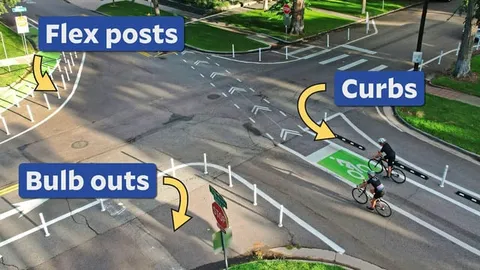 Aligned(opens in new tab)
Are Streets Too Complicated Now?
 City Beautiful
Asks whether today's proliferation of lines, signals, and lane types on streets is overcomplication or a needed response to modern demands, a question that runs directly through CS's Element-scale catalog and the density-tiered Corridor retrofit paths this video is tagged to.
MED-004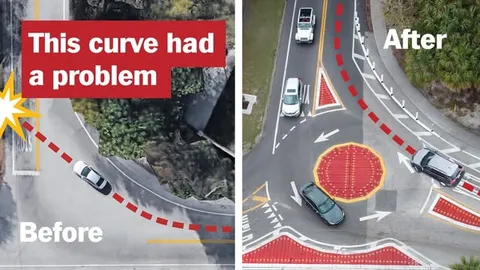 Aligned(opens in new tab)
This is the key to safer streets
 Streetcraft
A full traffic-calming toolkit walkthrough, plastic mini-roundabouts, curb extensions, chicanes, the speed bump/hump/cushion/table family, and a Cincinnati road-diet case study with dramatic before/after crash data.
MED-016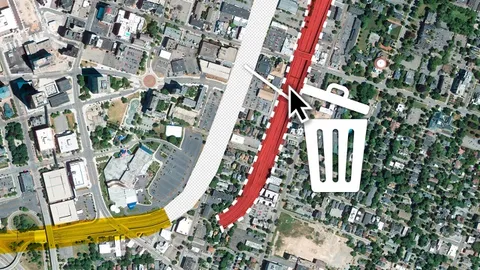 Aligned(opens in new tab)
What Happens If You Remove a Highway?
StreetcraftThe video looks at cities that removed urban highways, from Rochester's Inner Loop to Seattle's Alaskan Way Viaduct, and what replaced them. It is a real-world case for the Commonway System's road diet and corridor reallocation strategies.
MED-034 Aligned(opens in new tab)
Bike lanes are not good enough
City BeautifulThe video argues that painted bike lanes fail and shows what works instead: cycle tracks, protected intersections, advisory lanes, plus a road-diet case study. It makes the case for the protected cycling facilities the Commonway System's bike patterns specify.
MED-038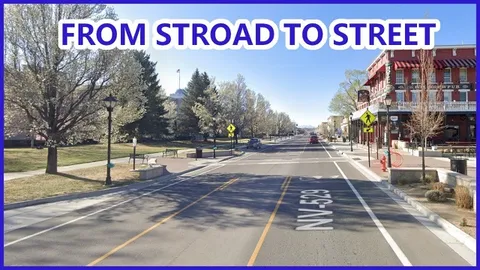 Aligned(opens in new tab)
How Carson City's Main Stroad Became a Street
 Yet Another Urbanist
The video documents Carson Street's conversion from a four-lane stroad to a two-lane street with wide sidewalks and a plaza, including the traffic studies and parking reclamation behind it. It is a full real-world walkthrough of the Commonway System's stroad pattern and road diet retrofits.
MED-045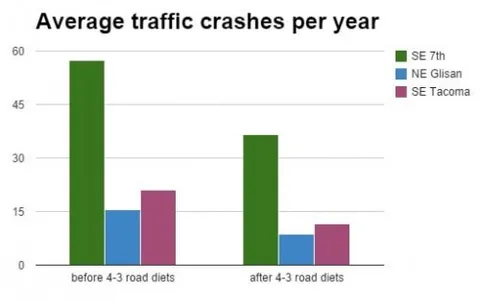 Aligned(opens in new tab)
The Airtight Case for Road Diets
 Streetsblog USA
The article lays out the evidence for four-to-three lane conversions, citing FHWA data showing 20 to 50 percent crash reductions with minimal capacity effects. It is the evidence summary behind the Commonway System's four-to-three road diet retrofit strategy.
MED-047 Aligned(opens in new tab)
Fabulous Ferndale (Ep 436)
 The Overhead Wire
Ferndale, Michigan's mayor describes the city's road diet of eight-lane Woodward Avenue and the practical politics of working with the state DOT. It is a practitioner-level case study for the Commonway System's road diet strategies.
MED-065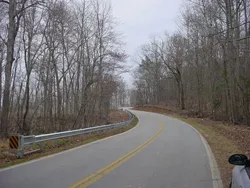 Aligned(opens in new tab)
Road Safety Audits (RSA)
 Federal Highway Administration
FHWA defines a road safety audit as a formal safety examination of an existing or future road by an independent, multidisciplinary team, usable at any project stage and any project size. It is the authoritative reference for the Commonway System's RSA process, answering the two central audit questions of what creates risk and what could mitigate it.
MED-081
#Where this leads: Target patterns
- Default (Standard Collector) (COL-DEF-01)
- Default (No Parking, No Direct Access) (ART-DEF-01)
- Downtown Thoroughfare (COL-DTH-07)
#Applicability and thresholds
Most effective below roughly 19,000 vehicles per day; can succeed up to about 23,000 to 25,000 with careful signal coordination, though more extensive redesign is typically needed above the lower threshold. Corridors with closely spaced signals need timing coordination to avoid queuing impacts at adjacent intersections.
#Evidence and effectiveness
FHWA reports an overall crash reduction of 19 to 47 percent for four-to-three lane road diets, driven by separating through and turning movements and reducing the speed variance between lanes that a four-lane cross-section otherwise creates.12
#Getting it built
Can move through the full construction spectrum. A road diet is frequently implemented as a low-cost restriping project, sometimes opportunistically bundled with routine repaving, making it one of the more common demonstration- and pilot-stage strategies before becoming permanent. See Construction Methodology & The Build Spectrum.
An Intersection Control Evaluation is not typically required unless the road diet is paired with a change in intersection control along the corridor. See Decision & Evaluation Processes.
#Who can move this
Usually a city or county public works or transportation department decision, often achievable without new legislation since it can be executed as a maintenance restriping project. See Legal & Planning Mechanisms and Funding & Financing Mechanisms.
#Related retrofit strategies
- Five-plus lane reallocation (RFT-CDR-02) (the equivalent approach for wider roadways)
- Lane diet (RFT-CDR-03) (a lighter-touch alternative that narrows lanes without removing one)
#References
- Legal / regulatory Federal Highway Administration, "Road Diets (Roadway Reconfiguration)," Proven Safety Countermeasures, FHWA-SA-12-013.(opens in new tab)
- Evidence-based Federal Highway Administration, Highway Safety Information System, "Evaluation of Lane Reduction 'Road Diet' Measures and Their Effects on Crashes and Injuries," 2010.(opens in new tab)
- Precedent-based NACTO Urban Street Design Guide, "Neighborhood Main Street."(opens in new tab)
- Legal / regulatory Federal Highway Administration, Road Diet Informational Guide, FHWA-SA-14-028, November 2014. Section 4.1.4 (lane widths of 10 to 12 ft typically used; center two-way left-turn lane typically 10 to 16 ft; one-way bike lane typically 5 ft) and Section 1.2.1 (the 1979 Billings, Montana installation on a 40 ft roadway).(opens in new tab)