
Retrofits · Corridor
RFT-CDR-06Transit priority lane retrofit
Converts an existing general travel lane or on-street parking lane into a lane dedicated to bus travel, curbside or center-running.
Strategy viewer

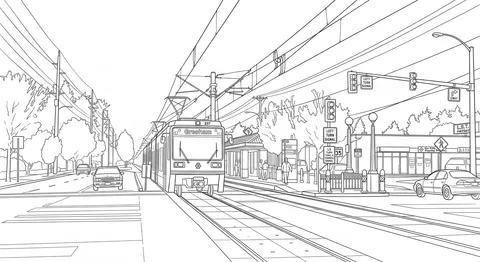
No illustration of Transit priority lane retrofit has been made yet. Interactive views are planned for every pattern and Retrofit Strategy.
#Overview
On a bus route with frequent service and heavy congestion, buses stuck in general traffic lose the reliability advantage that makes transit competitive with driving. Dedicating a lane to buses, marked with red paint and "Bus Only" signage in most U.S. applications, removes that conflict. The lane can run curbside, offset from the curb to preserve a parking or loading lane, or along the center median on a wider corridor.2
Related Media
6 items
 Aligned(opens in new tab)
Trams are Great! So why are the Streetcars SO BAD!?
 Not Just Bikes
The video diagnoses why North American streetcars underperform, blaming mixed-traffic operation, signal delay, and poor stop design. Its proposed fixes, dedicated lanes, signal priority, and better stops, mirror the transit patterns in the Commonway System.
MED-024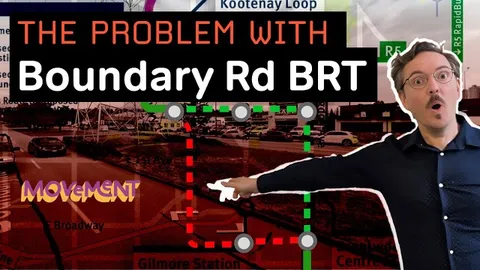 Aligned(opens in new tab)
The Problem with Vancouver's Boundary Rd BRT (w/ @MovementYVR)
 RMTransit
The video examines TransLink's Boundary Road BRT planning and warns against a watered-down "BRT-lite" that sacrifices route quality. It connects directly to the Commonway System's transit priority and arterial transit guidance, including the tradeoff between parking lanes and transit lanes.
MED-027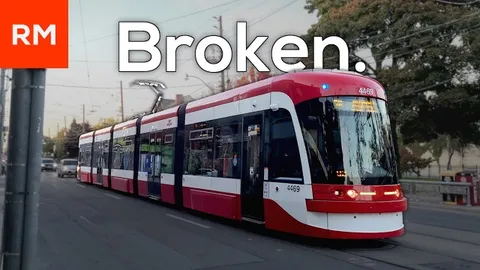 Aligned(opens in new tab)
A Plan to fix Toronto's Streetcars
RMTransitThe video proposes concrete fixes for Toronto's streetcar network: traffic and signal priority, upgraded stops, and operational improvements. These map to the Commonway System's transit priority retrofit and transit patterns.
MED-028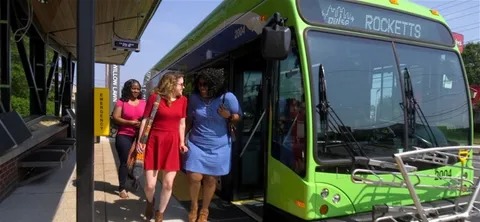 Aligned(opens in new tab)
ITDP Releases First-Ever Bus Rapid Transit Guide for U.S. Cities
ITDPThe article announces ITDP's BRT implementation guide for US cities, covering corridor selection, equitable planning, and case studies from Hartford, Albuquerque, and Richmond. It supports the Commonway System's arterial transit pattern and transit priority guidance.
MED-052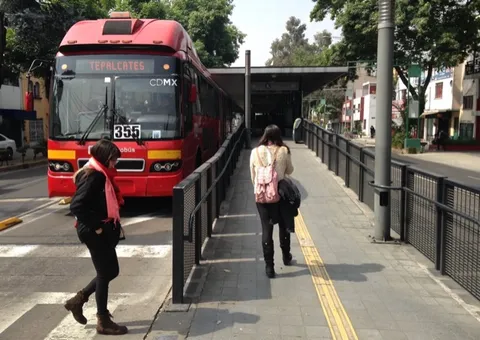 Aligned(opens in new tab)
All we are saying is give bus rapid transit a chance: Train-like service at a price we can afford
 Streetsblog Chicago
A civil engineer lays out the five elements of true BRT and recounts why Chicago's Ashland BRT failed politically while making the case for a Western Avenue line. It covers the transit priority and boarding details in the Commonway System's arterial transit guidance.
MED-057 Aligned(opens in new tab)
Ep 1: Stacy Thompson - Tactical Transit in Boston
 High Frequency
The episode describes Boston's 2017 pop-up bus lanes, which made trips about 25 percent faster with 94 percent rider approval. It is a real-world demo of the Commonway System's transit priority lane retrofit, including converting parking lanes to bus lanes.
MED-059
#Where this leads: Target patterns
- Local Transit (LOC-LTR-10)
- Collector Transit (COL-CTR-05)
- Arterial Transit (BRT/LRT) (ART-ATR-04)
#Applicability and thresholds
Most applicable on corridors with frequent bus service experiencing measurable delay from mixed traffic, particularly where curb, street, or driveway conflicts are low to moderate; where conflicts are high, a curbside lane may need to shift further from the curb or run center-median instead.
#Evidence and effectiveness
Agencies implementing dedicated and business-access-and-transit lanes report improved bus speed and schedule reliability, with the effect scaling with how much of the corridor's delay was previously caused by mixed-traffic conflict rather than signal timing or stop dwell time.13
#Getting it built
Frequently piloted with temporary cones, signage, and paint before permanent installation, since testing the lane's effect on both bus reliability and general traffic before committing to red paint and enforcement infrastructure is common practice. See Construction Methodology & The Build Spectrum.
#Who can move this
Typically a joint decision between the transit agency and the city or county transportation department, since the lane affects both bus operations and general traffic capacity. See Legal & Planning Mechanisms.
#Related retrofit strategies
- Parking-lane reallocation (RFT-CDR-05) (the underlying mechanism when the transit lane replaces parking rather than a travel lane)
#References
- Precedent-based Nelson\Nygaard, "Better Bus Transit Priority Toolkit," prepared for TriMet, March 2024.(opens in new tab)
- Precedent-based NACTO Urban Street Design Guide, "Transit Corridor," Transit Streets section.(opens in new tab)
- Evidence-based Federal Transit Administration, "Bus Lanes."(opens in new tab)