
Retrofits · Corridor
RFT-CDR-05Parking-lane reallocation
Converts an existing on-street parking lane to another use: a bike lane, a transit lane, a parklet, or public plaza space.
Strategy viewer

No illustration of Parking-lane reallocation has been made yet. Interactive views are planned for every pattern and Retrofit Strategy.
#Overview
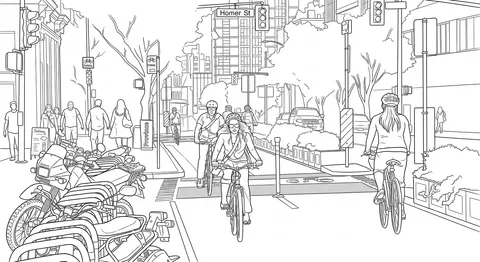
A parking lane is curb space, not travel-lane space, so reallocating it changes the curb's function rather than the roadway's through capacity. This makes it a distinct retrofit strategy from a road diet or lane diet, even though it's often executed alongside one. Common outcomes include a painted or protected bike lane, a peak-hour or full-time bus lane, or a parklet occupying what was previously one or two parking spaces.
Related Media
8 items
 Aligned(opens in new tab)
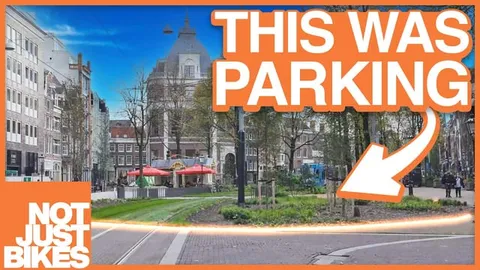
Why Amsterdam is Removing 10,000 Parking Spaces
 Not Just Bikes
Documents Amsterdam's on-street parking reduction through permit attrition and street redesigns, including the tradeoff of a large replacement garage inducing more driving nearby.
MED-009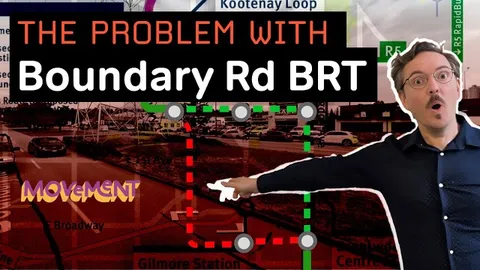 Aligned(opens in new tab)
The Problem with Vancouver's Boundary Rd BRT (w/ @MovementYVR)
 RMTransit
The video examines TransLink's Boundary Road BRT planning and warns against a watered-down "BRT-lite" that sacrifices route quality. It connects directly to the Commonway System's transit priority and arterial transit guidance, including the tradeoff between parking lanes and transit lanes.
MED-027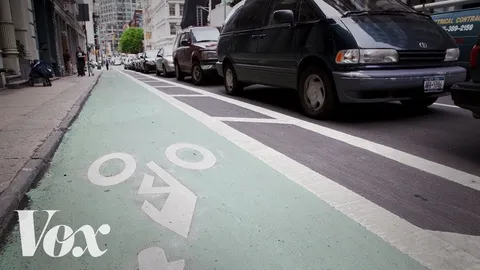 Aligned(opens in new tab)
Why protected bike lanes are more valuable than parking spaces
 Vox
VoxThe video uses New York's 9th Avenue parking-protected bike lane to show that trading parking for protected cycling improves safety and even retail sales. It is evidence for the Commonway System's parking-lane reallocation retrofit strategy.
MED-039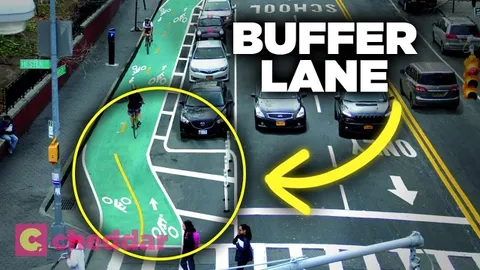 Aligned(opens in new tab)
How Expanding Bike Lanes Can Actually Decrease Traffic - Cheddar Explains
 Cheddar
The video cites New York DOT data showing protected bike lanes cut injuries while holding vehicle travel times steady. It supplies the measured results behind the Commonway System's protected bike lane guidance.
MED-043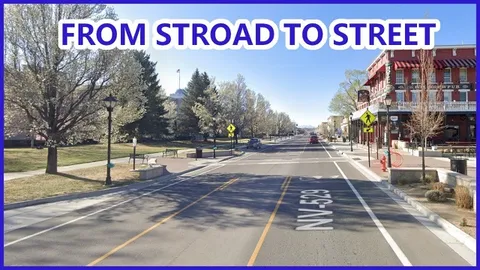 Aligned(opens in new tab)
How Carson City's Main Stroad Became a Street
 Yet Another Urbanist
The video documents Carson Street's conversion from a four-lane stroad to a two-lane street with wide sidewalks and a plaza, including the traffic studies and parking reclamation behind it. It is a full real-world walkthrough of the Commonway System's stroad pattern and road diet retrofits.
MED-045 Aligned(opens in new tab)
Why Parking Minimums Almost Destroyed My Hometown and How We Repealed Them
 Strong Towns
A Sandpoint, Idaho council member tells how parking minimums nearly forced a bank to demolish local businesses for 200 mandated spaces, and how repealing them downtown brought quick business growth. It is a first-person case study for the Commonway System's parking reform and density guidance.
MED-046 Aligned(opens in new tab)
Ep 1: Stacy Thompson - Tactical Transit in Boston
 High Frequency
The episode describes Boston's 2017 pop-up bus lanes, which made trips about 25 percent faster with 94 percent rider approval. It is a real-world demo of the Commonway System's transit priority lane retrofit, including converting parking lanes to bus lanes.
MED-059 Aligned(opens in new tab)
Parking Reform with Tony Jordan (Ep 558)
 Talking Headways
Tony Jordan of the Parking Reform Network makes the case against arbitrary parking requirements and for their abolition. It is an interview-length companion to the Commonway System's parking reform guidance.
MED-064
#Where this leads: Target patterns
- Bicycle Boulevard / Neighborhood Greenway (LOC-BBG-12)
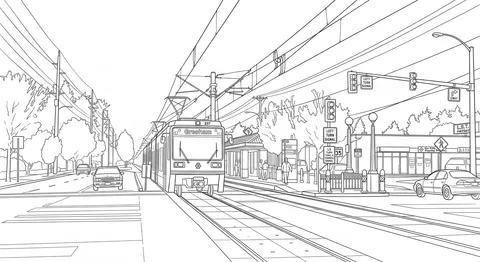
- Local Transit (LOC-LTR-10)
- Collector Transit (COL-CTR-05)
#Applicability and thresholds
Applicable wherever on-street parking exists and demand analysis shows the parking is underutilized relative to the corridor's other needs, or where the reallocated use (transit, bikes, public space) is judged a higher priority than parking supply at that location.
#Evidence and effectiveness
AASHTO identifies reconfiguring or reducing on-street parking as one of three established approaches to retrofitting bicycle facilities without widening the road, alongside reallocating travel-lane width and reducing the number of travel lanes.1
#Getting it built
Well suited to the early stages of the construction spectrum. A parklet or bike lane conversion is a common demonstration- or pilot-stage project, using paint, planters, and removable barriers before any permanent construction. See Construction Methodology & The Build Spectrum.
No formal decision process is typically required, though negotiation with affected business owners and residents is common practice, per FHWA guidance on parking removal.
#Who can move this
Usually a city public works or planning department decision, sometimes requiring business improvement district or city council coordination where displaced parking affects adjacent businesses. See Legal & Planning Mechanisms.
#Related retrofit strategies
- Protected bike lane retrofit via parking reduction (RFT-CDR-09) (a specific application of this strategy aimed at bike facilities)
#References
- Evidence-based Federal Highway Administration University Course on Bicycle and Pedestrian Transportation Design, module on street reconfiguration and parking removal.(opens in new tab)
- Precedent-based PPS, "A Glossary of Road Diet Strategies," on converting parking lanes to plazas and parklets.(opens in new tab)