
Retrofits · Corridor
RFT-CDR-04One-way to two-way conversion
Converts a one-way street back to two-way operation, typically reducing lane width and count in the process.
Strategy viewer
No illustration of One-way to two-way conversion has been made yet. Interactive views are planned for every pattern and Retrofit Strategy.
#Overview
Many one-way streets were converted from an original two-way configuration in the mid 20th century, aimed at speeding vehicle throughput through downtowns. Converting back to two-way slows traffic (drivers on a one-way street tend to travel faster and pay less attention, since they only need to watch one direction) and restores each direction's visibility to passing traffic, which research links to improved business exposure.
Related Media
 Aligned
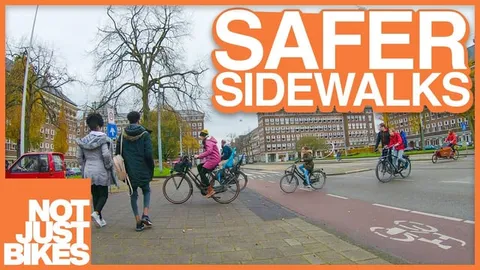
The Dutch Solution for Safer Sidewalks - Continuous Sidewalks
 Not Just Bikes
Shows the same sidewalk-continuity concept behind Continuous Sidewalk / Raised Junction in practice: the roadway rises to meet the sidewalk at a crossing, rather than the sidewalk dropping to meet the road, so geometry itself signals the priority shift.
MED-001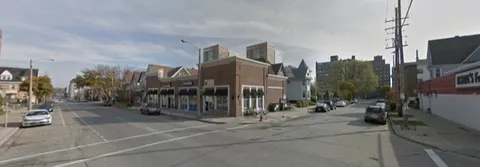 Aligned
3 Reasons to Turn These One-Way Streets into Two-Ways
 Strong Towns
A Milwaukee resident argues against the one-way couplet outside her door, citing safety, local business exposure, and simpler navigation, with Louisville data showing collisions fell after conversion. It maps to the Commonway System's one-way to two-way conversion retrofit.
MED-054#Where this leads: Target patterns
- Default (No Parking, No Direct Access) (ART-DEF-01)
- Main Street (LOC-MST-05)
- Downtown Thoroughfare (COL-DTH-07)
#Applicability and thresholds
Most commonly applied to downtown one-way pairs originally converted for vehicle throughput. A feasibility study is typically warranted first, since delivery access, transit routing, and turn restrictions all need re-evaluation under two-way operation.
#Evidence and effectiveness
Documented average speeds on one-way streets have measured roughly double those on comparable two-way streets in the same neighborhood.1 Separately, Louisville, Kentucky recorded a 23 percent decline in crime and a 42 percent reduction in robberies following conversion of a one-way pair to two-way, a result researchers attribute in part to slower speeds and increased pedestrian and cyclist presence.23
#Getting it built
Two-way conversion is harder to pilot informally than a simple road diet, since it typically requires new signal phasing, new signage, and turn-restriction changes at every intersection along the corridor. A quick-build stage using temporary signage and striping is more realistic than a short demonstration. See Construction Methodology & The Build Spectrum.
An Intersection Control Evaluation is commonly warranted at each affected intersection, since signal phasing and turn movements change substantially. See Decision & Evaluation Processes.
#Who can move this
A city council or transportation department decision, often requiring coordination across multiple city departments (signals, signage, parking) given the corridor-wide scope of the change. See Legal & Planning Mechanisms.
#Related retrofit strategies
None currently cataloged.
#References
- Evidence-based Ayres Associates, "One-Way or the Other? Two-Way Traffic Conversion Requires Study."(opens in new tab)
- Precedent-based "Student Corner: The State of the Debate: Two-Way Street Conversion," Community and Economic Development, UNC School of Government.(opens in new tab)
- Precedent-based Steuteville, R., "Cities Benefit from Restoring Two-Way Traffic," Congress for the New Urbanism.(opens in new tab)