
Retrofits · Corridor
RFT-CDR-07Protected bike lane retrofit via lane-width reallocation
Installs a physically separated bike lane by narrowing existing travel lanes and reallocating the recovered width, without removing a lane or on-street parking.
Strategy viewer
No illustration of Protected bike lane retrofit via lane-width reallocation has been made yet. Interactive views are planned for every pattern and Retrofit Strategy.
#Overview
This is the lightest-touch of the three protected bike lane retrofits. AASHTO's Green Book allows narrower vehicle lanes, down to 10 feet, in many contexts, and a four-lane arterial with turn lanes can often be restriped during routine maintenance to include a buffer and a physically separated bike lane without touching lane count or parking at all.1
Related Media
3 items
 Aligned(opens in new tab)
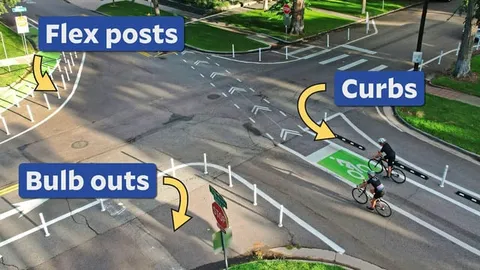
Are Streets Too Complicated Now?
 City Beautiful
Asks whether today's proliferation of lines, signals, and lane types on streets is overcomplication or a needed response to modern demands, a question that runs directly through CS's Element-scale catalog and the density-tiered Corridor retrofit paths this video is tagged to.
MED-004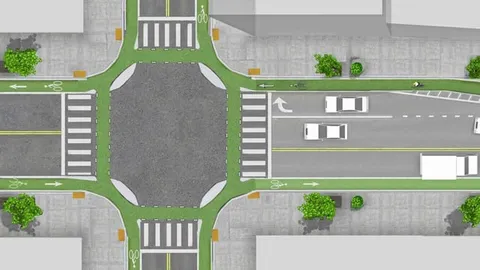 Aligned(opens in new tab)
Dutch-style intersection design: bike-friendly
 BicycleDutch
Shows the protected-intersection design vocabulary, continuous cycle tracks, corner refuge islands, separated signal phasing, that underpins CS's Protected Intersection pattern and the Corridor retrofit paths built around it.
MED-005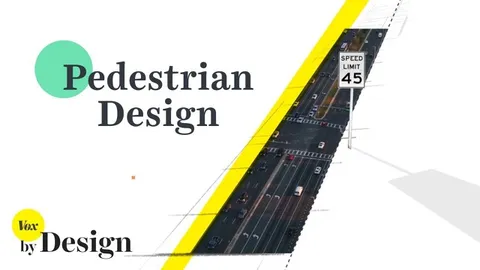 Aligned(opens in new tab)
America's deadliest road, explained
 Vox
VoxVox examines a one-kilometer stretch of US-19 in Florida, the deadliest of 60 pedestrian-fatality hotspots in a national study, and shows how eight lanes, 45 mph speeds and crossings nearly a kilometer apart make deaths predictable rather than accidental. It is a vivid case study of the Stroad problem and of the crosswalk, signal, driveway and lane-removal fixes the Commonway System specifies.
MED-107
#Where this leads: Target patterns
- Bike Highway / Greenway (COL-BHG-04)
- Default (Standard Collector) (COL-DEF-01) with Protected Bike Lane / Cycle Track (ELM-PBL-37)
#Applicability and thresholds
Most applicable where existing lanes are wider than required for safe operation at the corridor's design speed, giving enough recoverable width to build a genuine physical buffer rather than a painted line alone.
#Evidence and effectiveness
FHWA identifies planned road diets and similar retrofits of higher-speed roads as prime opportunities to add separated bike lanes, since the same width analysis that supports a lane diet or road diet also identifies the space available for a buffer and protected lane.2
#Getting it built
Restriping-based, so it can move through the full construction spectrum starting from paint and flexible delineators at the demonstration or pilot stage, before committing to permanent curb or planter-based separation. See Construction Methodology & The Build Spectrum.
#Who can move this
Usually a city or county public works decision, achievable through routine restriping maintenance in many cases. See Legal & Planning Mechanisms.
#Related retrofit strategies
- Protected bike lane retrofit via lane removal (RFT-CDR-08)
- Protected bike lane retrofit via parking reduction (RFT-CDR-09) (the other two approaches to the same underlying goal, distinguished by where the recovered width comes from)
#References
- Legal / regulatory AASHTO, A Policy on Geometric Design of Highways and Streets (Green Book), lane width criteria.(opens in new tab)
- Evidence-based Federal Highway Administration, "Separated Bike Lanes," Bicycle and Pedestrian Program.(opens in new tab)