
Retrofits · Corridor
RFT-CDR-02Five-plus lane reallocation
Reduces the through-lane count on a roadway of five or more lanes, applying road diet principles at a larger scale than the standard four-to-three conversion.
Strategy viewer
No illustration of Five-plus lane reallocation has been made yet. Interactive views are planned for every pattern and Retrofit Strategy.
#Overview
Wider roadways, five lanes and up, carry enough volume and turning complexity that a straightforward four-to-three conversion doesn't apply directly. This strategy still removes excess through capacity and adds or widens a center turn lane, but requires more careful traffic analysis and often a phased approach, since five-lane-and-larger corridors typically carry higher volumes and more conflicting turning movements than the classic road diet case.
Related Media
5 items
 Aligned(opens in new tab)
The Dutch Solution for Safer Sidewalks - Continuous Sidewalks
 Not Just Bikes
Shows the same sidewalk-continuity concept behind Continuous Sidewalk / Raised Junction in practice: the roadway rises to meet the sidewalk at a crossing, rather than the sidewalk dropping to meet the road, so geometry itself signals the priority shift.
MED-001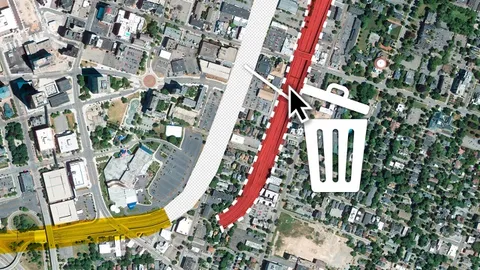 Aligned(opens in new tab)
What Happens If You Remove a Highway?
 Streetcraft
The video looks at cities that removed urban highways, from Rochester's Inner Loop to Seattle's Alaskan Way Viaduct, and what replaced them. It is a real-world case for the Commonway System's road diet and corridor reallocation strategies.
MED-034 Aligned(opens in new tab)
Rochester gave up on a highway and filled it in. Should Baltimore?
The Baltimore BannerThis long-form report traces Rochester's Inner Loop East removal, which turned a sunken expressway trench into homes, a bike path, and a boulevard. It is a deep single-city case for the Commonway System's highway-removal reasoning and corridor reallocation strategies.
MED-056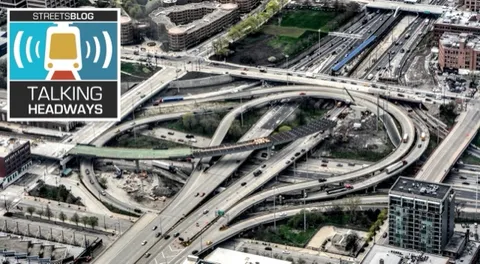 Aligned(opens in new tab)
How Money for Highways Could Have Built 36 Paris Metros (Ep 590)
 Talking Headways
The episode covers a data project mapping the tax base and land value that urban freeways stripped from 142 American cities. It documents the costs behind the Commonway System's skepticism of urban highway building.
MED-063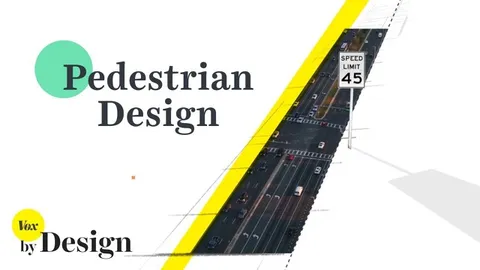 Aligned(opens in new tab)
America's deadliest road, explained
 Vox
VoxVox examines a one-kilometer stretch of US-19 in Florida, the deadliest of 60 pedestrian-fatality hotspots in a national study, and shows how eight lanes, 45 mph speeds and crossings nearly a kilometer apart make deaths predictable rather than accidental. It is a vivid case study of the Stroad problem and of the crosswalk, signal, driveway and lane-removal fixes the Commonway System specifies.
MED-107
#Where this leads: Target patterns
- Default (No Parking, No Direct Access) (ART-DEF-01)
- Boulevard (ART-BLV-02)
#Applicability and thresholds
Evaluated specifically for roadways with five or more lanes in NCHRP-adjacent research, distinct from the four-to-three case. Sight-distance and conflict-point improvements follow the same underlying mechanism as a standard road diet, but volume thresholds run higher given the additional capacity these corridors typically carry.
#Evidence and effectiveness
Research on five-lane-and-larger road diet projects documents conflict-point reduction and improved sight distance for turning drivers, using the same two-stage reasoning as smaller road diets: fewer lanes to scan, and a dedicated turn lane separating through and turning movements.1
#Getting it built
Can move through the construction spectrum, though the larger scope, more lanes, more signal coordination, more turning-movement analysis, makes a formal pilot or quick-build stage more valuable here than on a simple four-to-three conversion. See Construction Methodology & The Build Spectrum.
An Intersection Control Evaluation is worth considering where the corridor's intersections will also see a change in turn-lane configuration. See Decision & Evaluation Processes.
#Who can move this
Typically a city or county transportation department decision, though the larger scope and often-higher-classification roadway makes state DOT coordination more likely than with a simple four-to-three road diet. See Legal & Planning Mechanisms.
#Related retrofit strategies
- Four-to-three lane road diet (RFT-CDR-01) (the smaller-scale equivalent this strategy extends)
#References
- Evidence-based "An Evaluation of 'Road Diet' Projects on Five Lane and Larger Roadways," transportation research summary distributed via NACTO.(opens in new tab)
- Legal / regulatory Federal Highway Administration, "Road Diets (Roadway Reconfiguration)," Proven Safety Countermeasures, FHWA-SA-12-013.(opens in new tab)