
Protected Bike Lane / Cycle Track
ELM-PBL-37 Protected Bike Lane / Cycle Track
Related Media
 Aligned
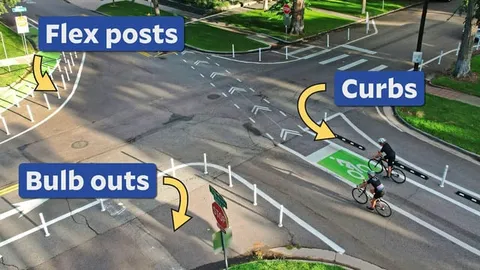
Are Streets Too Complicated Now?
 City Beautiful
Asks whether today's proliferation of lines, signals, and lane types on streets is overcomplication or a needed response to modern demands, a question that runs directly through CS's Element-scale catalog and the density-tiered Corridor retrofit paths this video is tagged to.
 Aligned
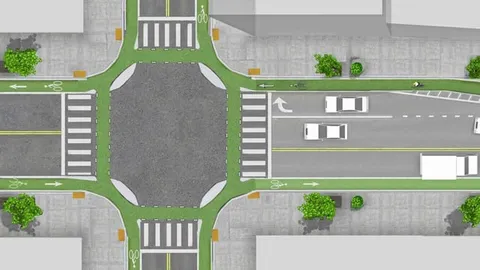
Dutch-style intersection design: bike-friendly
 BicycleDutch
Shows the protected-intersection design vocabulary, continuous cycle tracks, corner refuge islands, separated signal phasing, that underpins CS's Protected Intersection pattern and the Corridor retrofit paths built around it.
 Aligned
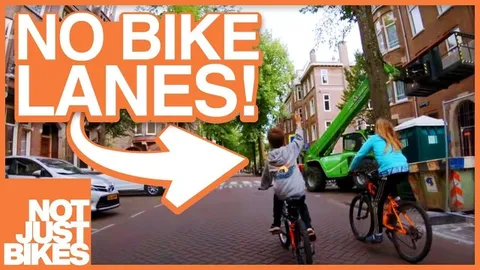
The Bike Lanes You Can't See - Ontvlechten
 Not Just Bikes
The video explains ontvlechten, the Dutch practice of disentangling car and bicycle traffic into separate hierarchical networks. It is a worked example of the Commonway System's cycling facilities and network patterns, showing how filtered permeability keeps bike routes safe and direct.
 Aligned
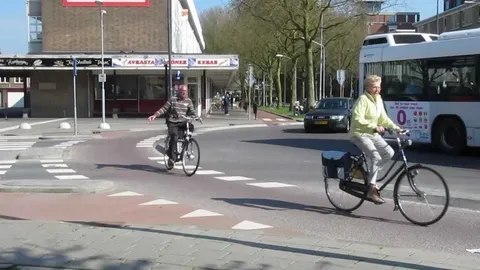
Roundabout with safe cycling facilities (Netherlands)
BicycleDutchA visual tour of a Dutch roundabout built with protected cycling facilities. It serves as a real-world reference for the Commonway System's roundabout and protected cycling intersection patterns.
 Context only
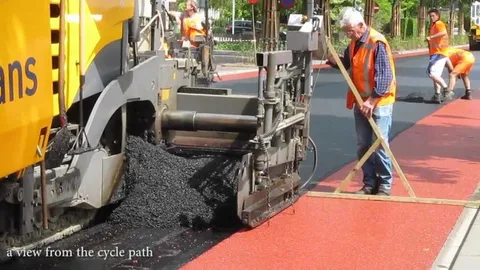
Rolling out a red carpet for cyclists (Netherlands)
BicycleDutchThe video shows the red-asphalt surfacing the Netherlands uses to mark and protect cycle paths. It illustrates the kind of legible, dedicated cycling facility described in the Commonway System's bike lane and greenway patterns.
 Counterexample
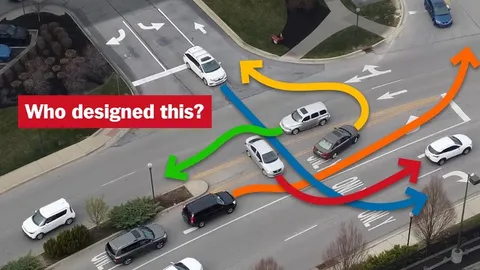
These Intersections Should Be Illegal
 Streetcraft
The video analyzes four badly designed American intersections, including an awkward roundabout and highway ramps that strand bike lanes. It is a cautionary companion to the Commonway System's intersection and cycling patterns, showing what failure looks like.
 Aligned
Bike lanes are not good enough
City BeautifulThe video argues that painted bike lanes fail and shows what works instead: cycle tracks, protected intersections, advisory lanes, plus a road-diet case study. It makes the case for the protected cycling facilities the Commonway System's bike patterns specify.
 Aligned
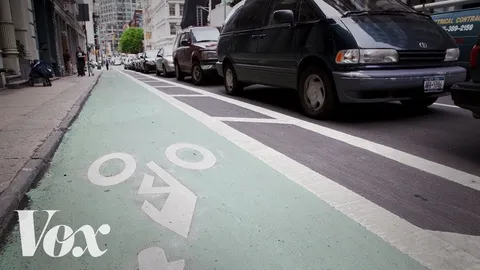
Why protected bike lanes are more valuable than parking spaces
 Vox
VoxThe video uses New York's 9th Avenue parking-protected bike lane to show that trading parking for protected cycling improves safety and even retail sales. It is evidence for the Commonway System's parking-lane reallocation retrofit strategy.
 Aligned
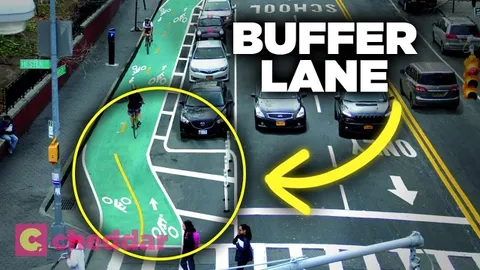
How Expanding Bike Lanes Can Actually Decrease Traffic - Cheddar Explains
 Cheddar
The video cites New York DOT data showing protected bike lanes cut injuries while holding vehicle travel times steady. It supplies the measured results behind the Commonway System's protected bike lane guidance.
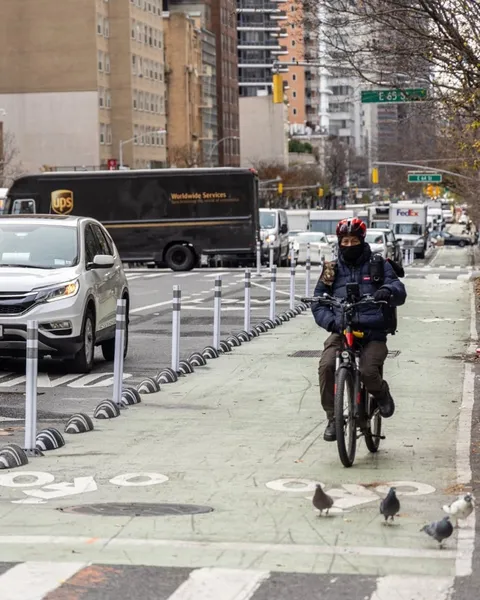 Aligned
Urban Bikeway Design Guide: Protected Bike Lanes
This excerpt from NACTO's Urban Bikeway Design Guide covers protected bike lane design, safety evidence, and applicability thresholds. It is the technical companion to the Commonway System's protected bike lane element.
 Aligned
Fabulous Ferndale (Ep 436)
 The Overhead Wire
Ferndale, Michigan's mayor describes the city's road diet of eight-lane Woodward Avenue and the practical politics of working with the state DOT. It is a practitioner-level case study for the Commonway System's road diet strategies.
 Aligned
A Network First Approach (Ep 349)
The episode lays out a "Network First" strategy for building complete, high-comfort bike networks quickly on low-stress streets. It covers the network build-out thinking behind the Commonway System's cycling facility patterns.
#Why this pattern exists
Physical separation removes the reliance on driver behavior and paint compliance that lower-tier bike facilities depend on, making cycling comfortable and accessible to a much broader range of riders, including children and less-confident adults, the core goal of an all-ages-and-abilities bike network.1 This pattern exists to document the design considerations specific to physical separation.
#Key considerations
- Intersection and driveway conflict points require particular design attention, since physical separation that continues uninterrupted mid-block can create visibility conflicts at any break in that separation
- Should be the aspirational default treatment on higher-speed or higher-volume corridors where cycling is intended to be a viable, comfortable option for a broad range of riders
- Maintenance access (snow removal, sweeping) needs to be planned for within a physically separated facility, since standard vehicle-lane equipment may not fit
- Minimum rideable width is 6.5–7 ft (2–2.1 m) for a one-way facility, with 8–12.5 ft (2.5–3.8 m) preferred where volume supports side-by-side riding or passing.2 Buffer width must be at least 3 ft (0.9 m) where adjacent to on-street parking, to clear the door-swing zone, or 2–3 ft (0.6–0.9 m) on streets without parking at 30 mph or below.2
#Related patterns
Buffered Bike Lane (ELM-BBL-35), Conventional Bike Lane (ELM-CBL-34) (lower-separation alternatives); Bicycle Signal (ELM-BCS-16) (a common companion treatment at intersections)
#Getting there: Retrofit path options
This Element is the direct product of all three protected bike lane retrofits: via lane-width reallocation (RFT-CDR-07), via lane removal (RFT-CDR-08), and via parking reduction (RFT-CDR-09).
#References
- Evidence-based Lusk, A.C. et al. (2011), "Risk of injury for bicycling on cycle tracks versus in the street," Injury Prevention 17(2). Montreal study: 28% lower injury rate on cycle tracks compared to comparable streets.(opens in new tab)
- Precedent-based NACTO, Urban Bikeway Design Guide, 3rd Ed., "Protected Bike Lanes." Design specifications.(opens in new tab)