
Bicycle Signal
ELM-BCS-16 Bicycle Signal
Related Media
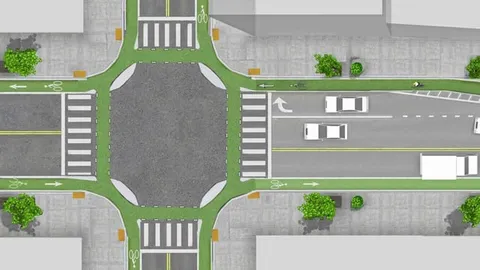 Aligned
Dutch-style intersection design: bike-friendly
 BicycleDutch
Shows the protected-intersection design vocabulary, continuous cycle tracks, corner refuge islands, separated signal phasing, that underpins CS's Protected Intersection pattern and the Corridor retrofit paths built around it.
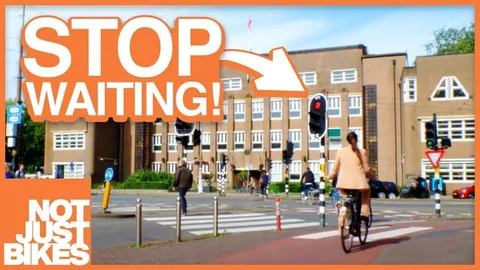 Aligned
Why the Dutch Wait Less at Traffic Lights
 Not Just Bikes
Breaks down Dutch traffic-responsive signal timing, independent phasing, transit signal priority, and no-right-turn-on-red as a pedestrian/cyclist safety measure.
#Why this pattern exists
Where a bicycle facility crosses or interacts with an intersection in a way that a shared vehicle or pedestrian phase does not safely accommodate, a dedicated bicycle signal resolves the conflict explicitly rather than leaving cyclists to interpret a signal meant for another mode. This pattern exists to document where that dedicated treatment is warranted.1
#Key considerations
- Most appropriate where a protected bike lane or cycle track meets an intersection with a conflicting turning movement that a shared phase cannot resolve safely
- Should be clearly distinguishable from the vehicle signal to avoid driver confusion about which indication applies to them
- Leading bicycle intervals (giving cyclists a head start before conflicting vehicle movements) are a common and effective use of this pattern2
#Related patterns
Traffic Signal (ELM-TFS-14) (the vehicle control this pattern separates from); Protected Bike Lane/Cycle Track (ELM-PBL-37) (the facility type most commonly paired with this treatment)
#References
- Legal / regulatory MUTCD 11th Edition with Revision 1 (FHWA, December 2025; effective March 5, 2026), Chapter 9D, "Signals for Bicycle Facilities." The current binding standard; bicycle signals existed only as FHWA Interim Approval IA-16 (2013) until the 11th edition made them standard.(opens in new tab)
- Precedent-based NACTO Urban Bikeway Design Guide, 3rd ed. (2025), "Bike Signal Design." Leading bicycle interval and actuation-versus-recall design guidance.(opens in new tab)