
Buffered Bike Lane
ELM-BBL-35 Recommended Element
Buffered Bike Lane
A striped bike lane with an additional painted buffer zone, typically hatched or cross-hatched markings, separating it from the adjacent vehicle travel lane or parking lane by more distance than a conventional bike lane alone provides.
Related Media
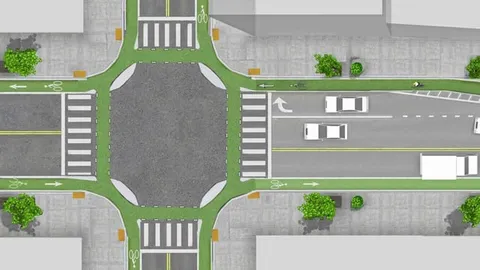

#Why this pattern exists
Adding painted buffer width increases the physical and perceived separation between cyclists and vehicle traffic without the cost or space demand of a physical barrier, addressing some of the comfort gap between a conventional bike lane and a fully protected facility. This pattern exists to document that intermediate option.1
#Key considerations
- Buffer should be placed on the side of greater conflict risk, typically between the bike lane and the vehicle travel lane, or on both sides where a parking lane is also present2
- Still relies on driver compliance with paint markings alone, and may not be sufficient comfort for all-ages-and-abilities ridership on higher-speed corridors
- A reasonable default upgrade from a conventional bike lane where a full protected facility is not currently feasible
#Related patterns
Conventional Bike Lane (ELM-CBL-34) (the baseline this pattern improves on); Protected Bike Lane/Cycle Track (ELM-PBL-37) (the stronger-separation alternative)
#References
- Legal / regulatory MUTCD 11th Edition with Revision 1 (FHWA, December 2025; effective March 5, 2026), Section 9C.02, "Buffered Bike Lane."(opens in new tab)
- Precedent-based NACTO, Urban Bikeway Design Guide, 3rd Ed. Buffer placement and sizing guidance.(opens in new tab)
© 2026 Commonway System