
Pedestrian Safety Island / Refuge
ELM-PSI-09 Pedestrian Safety Island / Refuge
Related Media
 Aligned
This is the key to safer streets
 Streetcraft
A full traffic-calming toolkit walkthrough, plastic mini-roundabouts, curb extensions, chicanes, the speed bump/hump/cushion/table family, and a Cincinnati road-diet case study with dramatic before/after crash data.
 Aligned
Crossing the Street Shouldn't Be Deadly (but it is)
 Not Just Bikes
This video walks through pedestrian crossing designs, from beg buttons and signal phases to raised crossings, HAWK beacons, and continuous sidewalks. It shows how crossing geometry and timing decide whether walking is safe, the same question behind the Commonway System's crosswalk and crossing elements.
 Aligned
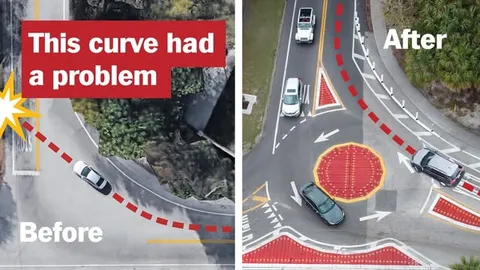
What's Behind Connecticut's Growing Roundabout Push?
 Roads & Bridges
The article reports on Connecticut DOT's roundabout program, including a five-intersection study showing severe crashes down 81 percent after conversion. It is real-world evidence for the Commonway System's roundabouts-first intersection philosophy.
#Why this pattern exists
Wide or multi-lane crossings ask a pedestrian to judge gaps in traffic across the full roadway width at once, a task that becomes harder and riskier as width and traffic volume increase; a refuge island breaks that judgment into two simpler, more manageable stages.1 This pattern exists to document the sizing and placement considerations that make an island genuinely usable rather than a token gesture.
#Key considerations
- Island width must be sufficient for a pedestrian, and ideally a pedestrian with a stroller or wheelchair, to wait comfortably, not just a painted sliver
- Cut-through openings at grade (rather than requiring a step up) improve accessibility and should be the default2
- Placement should align precisely with the crosswalk it serves; an offset island creates an awkward or unsafe crossing path
#Related patterns
Crosswalk (ELM-CRW-08) (the crossing this pattern supports); Curb Ramp (ELM-CRP-03), Detectable Warning Surface (ELM-DWS-10) (companion accessibility elements at the island itself); Median Island (ELM-MDI-45) (a related but distinct treatment built for calming and access management rather than crossing assistance)
#References
- Evidence-based Zegeer, C. et al., "Safety Effects of Marked Versus Unmarked Crosswalks at Uncontrolled Locations," FHWA-RD-01-075 (2002). Documents a crash modification factor of 0.54 (a 46% crash reduction) for a raised median with a marked crosswalk compared to an unmarked comparison.(opens in new tab)
- Legal / regulatory PROWAG (U.S. Access Board, 2023 final rule; adopted into DOT's ADA regulations effective January 17, 2025), Section R306, "Pedestrian Street Crossings." Cut-through opening and accessibility requirements at medians and islands.(opens in new tab)