
Crosswalk
ELM-CRW-08 Crosswalk
Related Media
 Aligned
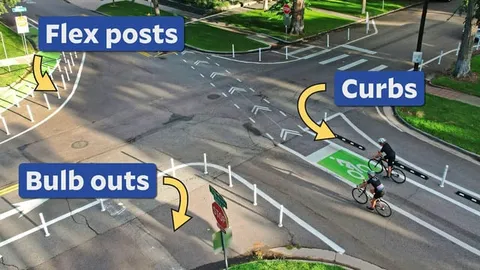
Are Streets Too Complicated Now?
 City Beautiful
Asks whether today's proliferation of lines, signals, and lane types on streets is overcomplication or a needed response to modern demands, a question that runs directly through CS's Element-scale catalog and the density-tiered Corridor retrofit paths this video is tagged to.
 Aligned
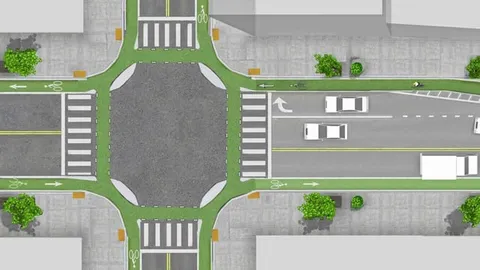
Dutch-style intersection design: bike-friendly
 BicycleDutch
Shows the protected-intersection design vocabulary, continuous cycle tracks, corner refuge islands, separated signal phasing, that underpins CS's Protected Intersection pattern and the Corridor retrofit paths built around it.
 Aligned
Crossing the Street Shouldn't Be Deadly (but it is)
 Not Just Bikes
This video walks through pedestrian crossing designs, from beg buttons and signal phases to raised crossings, HAWK beacons, and continuous sidewalks. It shows how crossing geometry and timing decide whether walking is safe, the same question behind the Commonway System's crosswalk and crossing elements.
 Context only
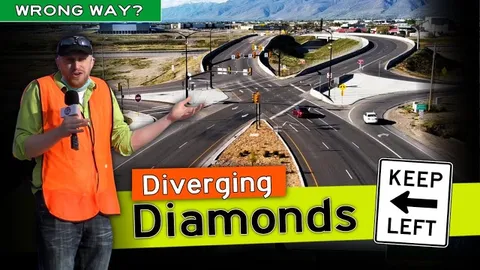
Would you drive on this FLIP-FLOPPED interchange? (It's better in every way!)
 Road Guy Rob
The video compares diverging diamond interchanges with conventional diamonds, and looks at SPUIs and pedestrian treatment. It gives the Commonway System's grade-separated interchange pattern a vivid real-world counterpart.
 Aligned
Open Plans (Ep 341)
The episode covers Open Plans' New York campaigns for school streets, low-traffic neighbourhoods, and intersection daylighting. It shows the Commonway System's modal filtering and traffic calming measures in campaign form.
 Aligned
This Atlanta Corridor Makes Walking Normal and Deadly
 The Strong Towns Podcast
The episode examines Atlanta's Buford Highway, a six-to-eight-lane arterial where over 20 percent of trips happen outside a car, and the walk audits that exposed it. It is a vivid case study of the stroad problem the Commonway System classifies as Avoid.
 Context only
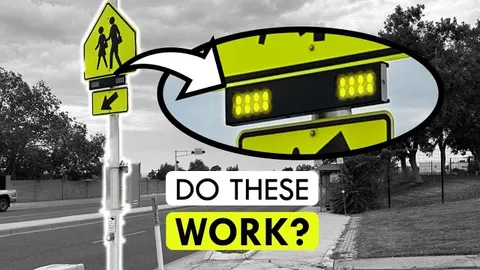
The Insane Ways Traffic Engineers Try to Make Streets 'Safe' For Walking
 CityNerd
Ray Delahanty examines whether pedestrian crossing devices like RRFBs and HAWK signals actually work and how engineers decide when and where to install them. It covers the engineering decision process behind crosswalk requests, one of the Commonway System's named examples of changes residents ask for.
 Context only
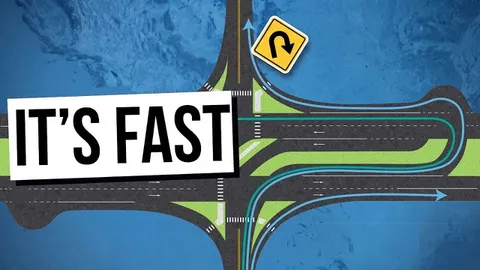
The Intersection That Makes Left Turns Impossible
 Safe By Design
This video explains how the Restricted Crossing U-Turn removes left turns and crossing movements from the side street, with crash-reduction results from Alabama, Nebraska and North Carolina and an honest look at the longer pedestrian crossings it can create. It is a close companion to the Commonway System's RCUT pattern and retrofit strategy, and to the related Median U-Turn and Displaced Left-Turn designs.
 Aligned
America's deadliest road, explained
 Vox
VoxVox examines a one-kilometer stretch of US-19 in Florida, the deadliest of 60 pedestrian-fatality hotspots in a national study, and shows how eight lanes, 45 mph speeds and crossings nearly a kilometer apart make deaths predictable rather than accidental. It is a vivid case study of the Stroad problem and of the crosswalk, signal, driveway and lane-removal fixes the Commonway System specifies.
 Aligned
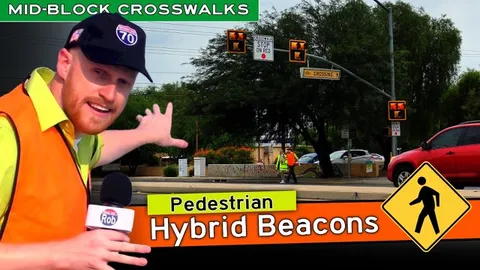
Can this "HAWK" STOP LIGHT make walking feel SAFE again?
Road Guy RobRob explains why painted mid-block crosswalks and flashing yellow lights are so often ignored, then shows how the Pedestrian Hybrid Beacon (HAWK), which stays dark until a pedestrian calls it and then commands a full stop, reaches 97 to 99 percent driver compliance, with Tucson's warrant and equity criteria. It supports the Commonway System's Pedestrian Hybrid Beacon pattern directly, and shows why the Crosswalk, RRFB and Pedestrian Signal patterns rate different devices differently.
#Why this pattern exists
A crosswalk establishes a legally and visually defined place for pedestrians to cross, giving both pedestrians and drivers a shared, predictable expectation about where crossing will occur. This pattern exists to document marking types and the considerations that determine where and how a crossing should be marked, distinct from the signals or islands that may accompany it.2
#Key considerations
- Marking visibility (continental/ladder striping vs. simple parallel lines) should scale with vehicle speed and pedestrian volume at the location
- A marked crosswalk alone does not guarantee driver yielding; higher-speed or multi-lane crossings typically need a supporting treatment (signal, beacon, refuge island)1
- Midblock crossings need particular care in sight-distance and driver expectation, since they occur outside the predictable intersection pattern
#Related patterns
Pedestrian Safety Island/Refuge (ELM-PSI-09), Detectable Warning Surface (ELM-DWS-10), Curb Ramp (ELM-CRP-03) (companion elements at any crossing); RRFB (ELM-RRF-17), Pedestrian Hybrid Beacon (ELM-PHB-18) (supporting treatments for higher-speed or higher-volume crossings)
#References
- Evidence-based Zegeer, C. et al., "Safety Effects of Marked Versus Unmarked Crosswalks at Uncontrolled Locations," FHWA-RD-01-075 (2002). A study of 1,000 marked and 1,000 unmarked sites, basis for the finding that markings alone aren't sufficient at higher speed, volume, or multi-lane crossings.(opens in new tab)
- Legal / regulatory MUTCD 11th Edition with Revision 1 (FHWA, December 2025; effective March 5, 2026), Part 3 (Markings). Governs marking types, including transverse lines and continental/ladder striping.(opens in new tab)