
Bike Box
ELM-BKB-42 Bike Box
Related Media
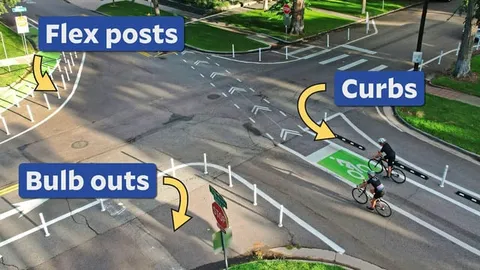 Aligned
Are Streets Too Complicated Now?
 City Beautiful
Asks whether today's proliferation of lines, signals, and lane types on streets is overcomplication or a needed response to modern demands, a question that runs directly through CS's Element-scale catalog and the density-tiered Corridor retrofit paths this video is tagged to.
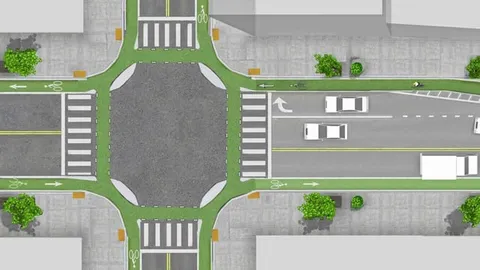 Aligned
Dutch-style intersection design: bike-friendly
 BicycleDutch
Shows the protected-intersection design vocabulary, continuous cycle tracks, corner refuge islands, separated signal phasing, that underpins CS's Protected Intersection pattern and the Corridor retrofit paths built around it.
#Why this pattern exists
At a signalized intersection, a cyclist stopped alongside or behind queued vehicles has reduced visibility to drivers and a harder time making a turning movement across traffic once the signal changes; a bike box gives cyclists a visible head-start position ahead of the queue, addressing this specific intersection conflict. This pattern exists to document where and how that positioning treatment is applied.1
#Key considerations
- Requires a "no turn on red" restriction for vehicles at that approach, since the box’s function depends on vehicles not entering the space during the cyclist’s queuing period
- Most effective when paired with a bike lane leading into the box, so cyclists have a legible, protected path to reach it
- Signal timing and driver awareness both affect real-world compliance; signage and clear markings help reinforce expected behavior
#Related patterns
Green Pavement/Conflict Marking (ELM-GPM-38) (often used to highlight the box itself); Protected Bike Lane/Cycle Track (ELM-PBL-37), Conventional Bike Lane (ELM-CBL-34) (the facilities that typically lead into a bike box)