
Shared-Use Path
LOC-SUP-13 Shared-Use Path
Related Media

Typical at: Suburban Compact Urban Core
Undeveloped and Rural contexts are unlikely to carry a purpose-built shared-use path.
#Modal hierarchy
Modal hierarchy
#Design notes
Width should accommodate two-way pedestrian and bicycle travel without forcing conflict, with connections back to the street network at logical, safe, visible points rather than incidental gaps.1 Distinct from Bicycle Boulevard / Neighborhood Greenway (LOC-BBG-12), which shares an on-street roadway rather than separating off-street, and from Multi-Use Trail / Greenway (COL-MUT-06), which is longer-distance and destination-scale rather than local-connector scale.
#Related patterns
- Bicycle Boulevard / Neighborhood Greenway (LOC-BBG-12)
- Multi-Use Trail / Greenway (COL-MUT-06)
#Getting there: Retrofit path options
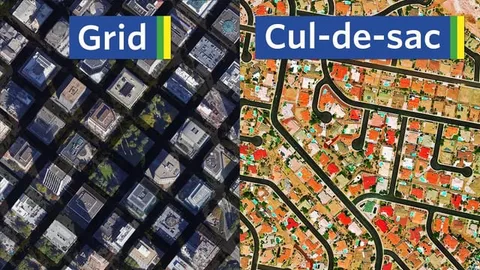
Barrier-crossing / network reconnection retrofit (RFT-NET-03) commonly takes this form where it crosses a highway, rail line, or disconnected cul-de-sac pattern.
#References
- Legal / regulatory AASHTO, Guide for the Development of Bicycle Facilities, 5th Edition, 2024.(opens in new tab)