
Patterns · Elements
ELM-MDI-45 RecommendedMedian Island
A raised or landscaped island placed along the center of a roadway to narrow the effective travel width and separate opposing traffic, without a pedestrian crossing function.
Pattern viewer
No illustration of Median Island has been made yet. Interactive views are planned for every pattern and Retrofit Strategy.
Related Media
3 items
 Aligned(opens in new tab)
Are Streets Too Complicated Now?
 City Beautiful
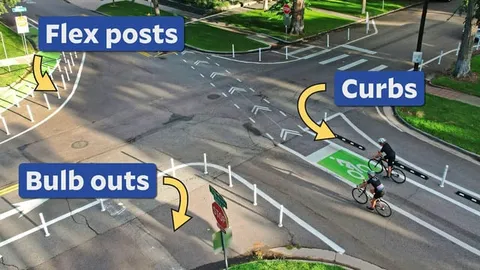
Asks whether today's proliferation of lines, signals, and lane types on streets is overcomplication or a needed response to modern demands, a question that runs directly through CS's Element-scale catalog and the density-tiered Corridor retrofit paths this video is tagged to.
MED-004 Aligned(opens in new tab)
Crossing the Street Shouldn't Be Deadly (but it is)
 Not Just Bikes
This video walks through pedestrian crossing designs, from beg buttons and signal phases to raised crossings, HAWK beacons, and continuous sidewalks. It shows how crossing geometry and timing decide whether walking is safe, the same question behind the Commonway System's crosswalk and crossing elements.
MED-022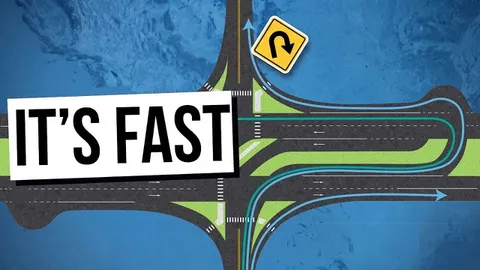 Aligned(opens in new tab)
The Intersection That Makes Left Turns Impossible
 Safe By Design
This video explains how the Restricted Crossing U-Turn removes left turns and crossing movements from the side street, with crash-reduction results from Alabama, Nebraska and North Carolina and an honest look at the longer pedestrian crossings it can create. It is a close companion to the Commonway System's RCUT pattern and retrofit strategy, and to the related Median U-Turn and Displaced Left-Turn designs.
MED-089
#Why this pattern exists
Narrowing a roadway's visual and physical width slows traffic and reduces opposing-direction conflicts, independent of whether the median also serves a crossing purpose. Pedestrian Safety Island / Refuge documents the crossing-assistance case; this pattern documents the calming and access-management case, where a median exists to manage the corridor itself rather than to assist a specific crossing movement.12
#Key considerations
- Access management benefits scale with how consistently the median precludes unsafe mid-block left turns and crossing movements along the corridor, not just at one isolated point
- Landscaping and drainage design should account for maintenance access and sightlines, since a raised median interrupts both the roadway's drainage path and driver sightlines around it
- Width should be sufficient to read visually as a real barrier rather than a painted gesture, while remaining consistent with the corridor's overall cross-section
- Where a crossing is also needed nearby, coordinate with Pedestrian Safety Island / Refuge rather than assuming this pattern alone provides safe pedestrian passage
#Related patterns
- Pedestrian Safety Island / Refuge (ELM-PSI-09) (a related but distinct treatment built specifically for two-stage pedestrian crossing)
- Curb Extension (ELM-CBE-02) (a lateral narrowing approach rather than a center-of-roadway one)
- Boulevard (ART-BLV-02) (the Arterial-scale corridor pattern this most often appears within)
#References
- Legal / regulatory Federal Highway Administration, "Proven Safety Countermeasures: Corridor Access Management." Raised medians that preclude across-roadway movements as an access-management treatment.(opens in new tab)
- Evidence-based Gluck, J., Levinson, H.S., and Stover, V., Impacts of Access Management Techniques, NCHRP Report 420, Transportation Research Board, 1999.(opens in new tab)