
Conventional Bike Lane
ELM-CBL-34 Situational / Discouraged Element
Conventional Bike Lane
A striped, dedicated on-street lane for bicycle travel, separated from the adjacent vehicle travel lane by paint markings alone, with no physical buffer or barrier.
Related Media
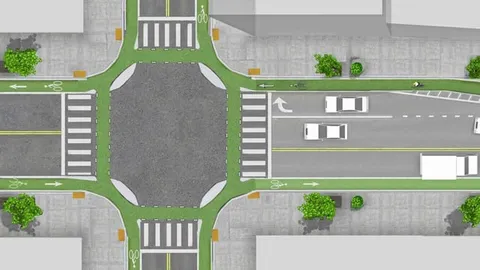

#Why this pattern exists
A conventional bike lane provides a clearly delineated, expected space for cyclists that a shared travel lane does not, improving predictability for both cyclists and drivers at a lower cost and space requirement than a buffered or protected facility. This pattern exists to document where this baseline level of separation is adequate versus where a stronger treatment is warranted.1
#Key considerations
- Adequacy depends heavily on adjacent vehicle speed and volume; paint-only separation becomes less appropriate as speed and volume increase2
- Lane width should accommodate safe passing distance from parked cars where relevant, to avoid the door-zone conflict
- Should be considered a baseline treatment rather than the ceiling; upgrading to a buffered or protected facility should be the default aspiration on higher-stress corridors
#Related patterns
Buffered Bike Lane (ELM-BBL-35), Protected Bike Lane/Cycle Track (ELM-PBL-37) (stronger-separation alternatives); Sharrow (ELM-SHR-39) (a lesser treatment for contexts where even this pattern is not feasible)
#References
- Legal / regulatory AASHTO, Guide for the Development of Bicycle Facilities. Adopted by most state DOTs as the foundational lane-width and design standard.(opens in new tab)
- Precedent-based NACTO, Urban Bikeway Design Guide, 3rd Ed. (2025), "Design User, Design Speed, and Design Year." Protected lanes become the only all-ages-and-abilities-permissible option above 25 mph or 6,000 vehicles per day.(opens in new tab)
© 2026 Commonway System